
Last updated September 11, 2026
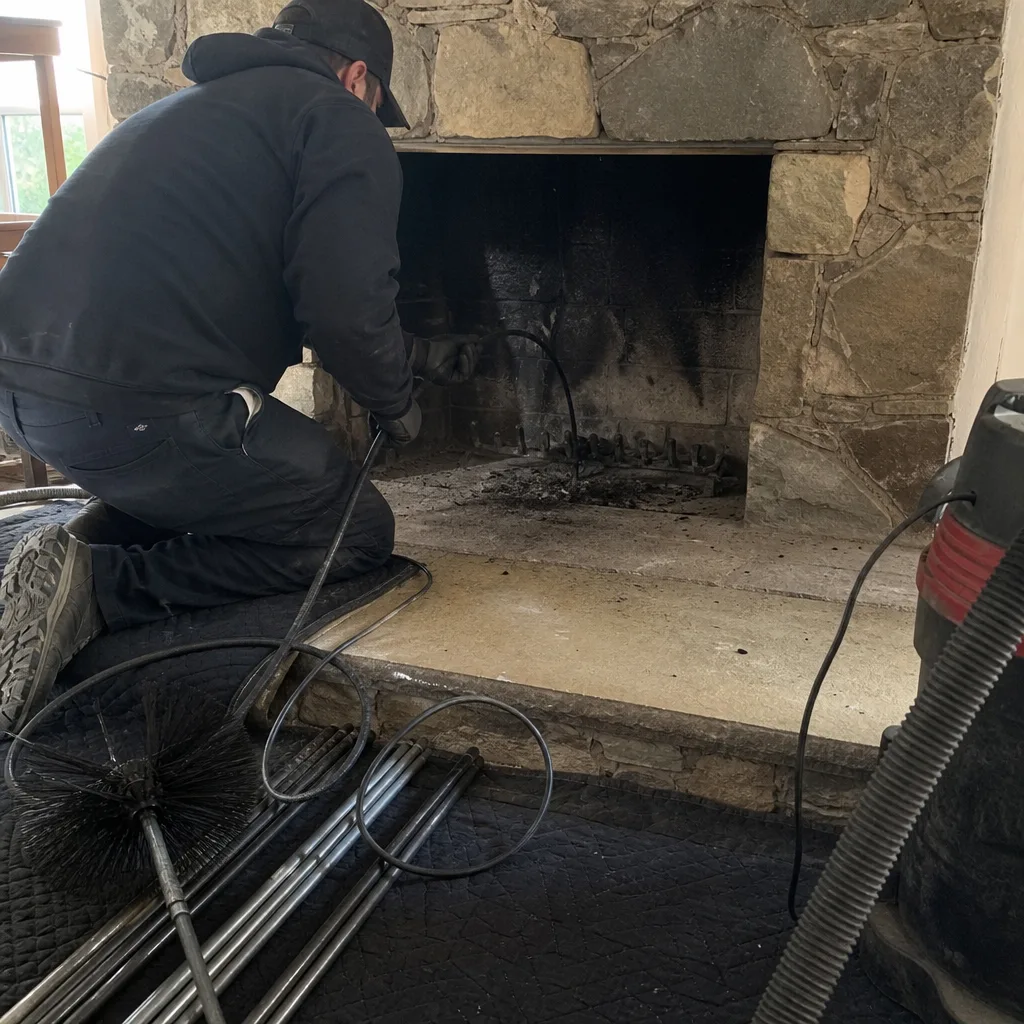
Level 1 sweep and inspection to the NFPA 211 annual standard - flue, crown, cap, and flashing checked and photographed
Chimney sweep logs do not sweep chimneys. They loosen some creosote - which then falls where a brush and vacuum still have to collect it.


 Before
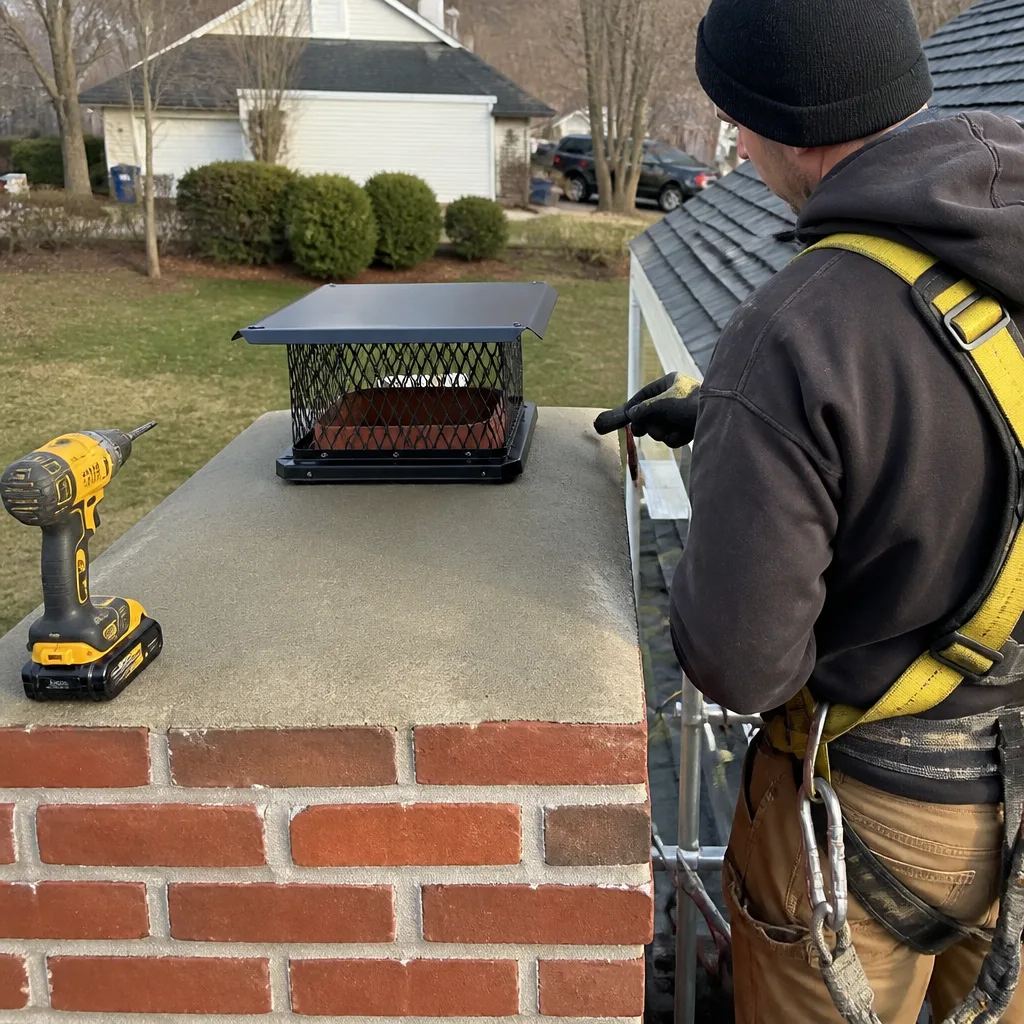 After
After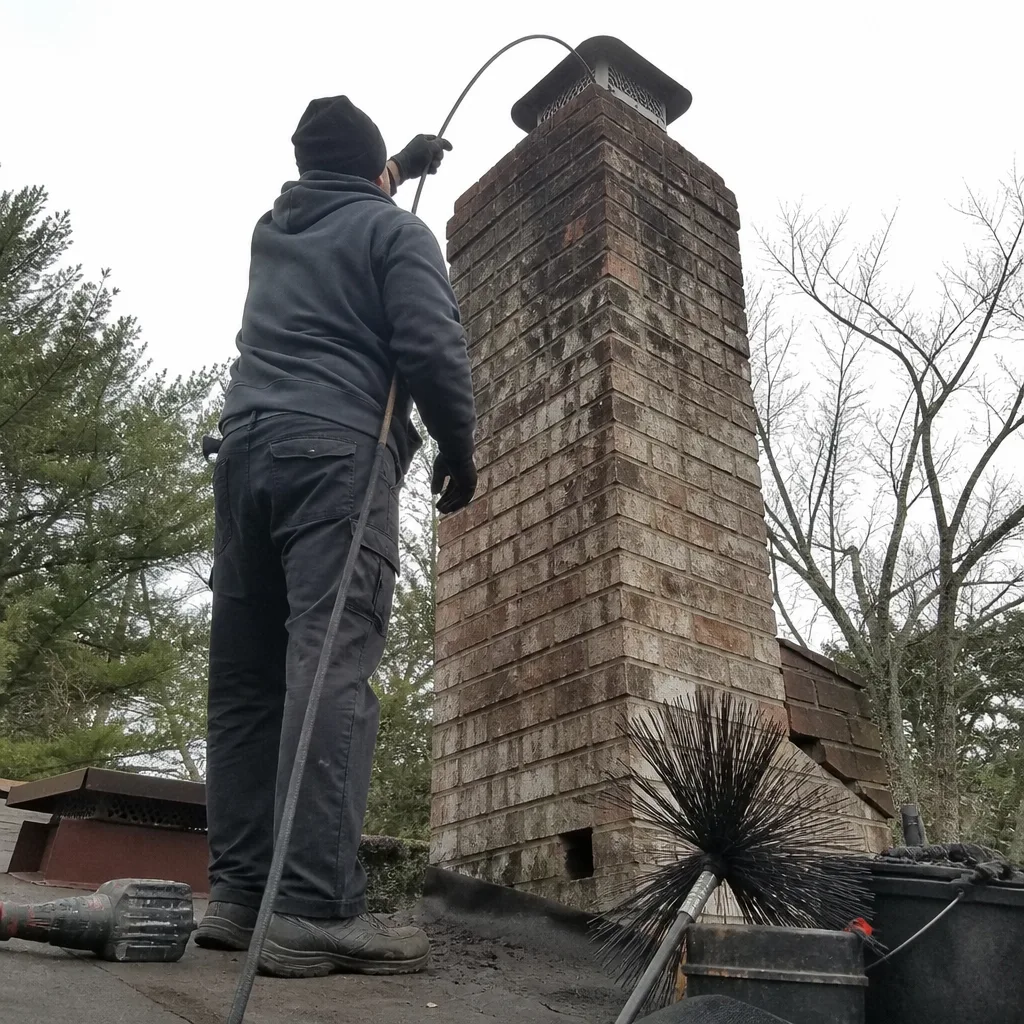 Before
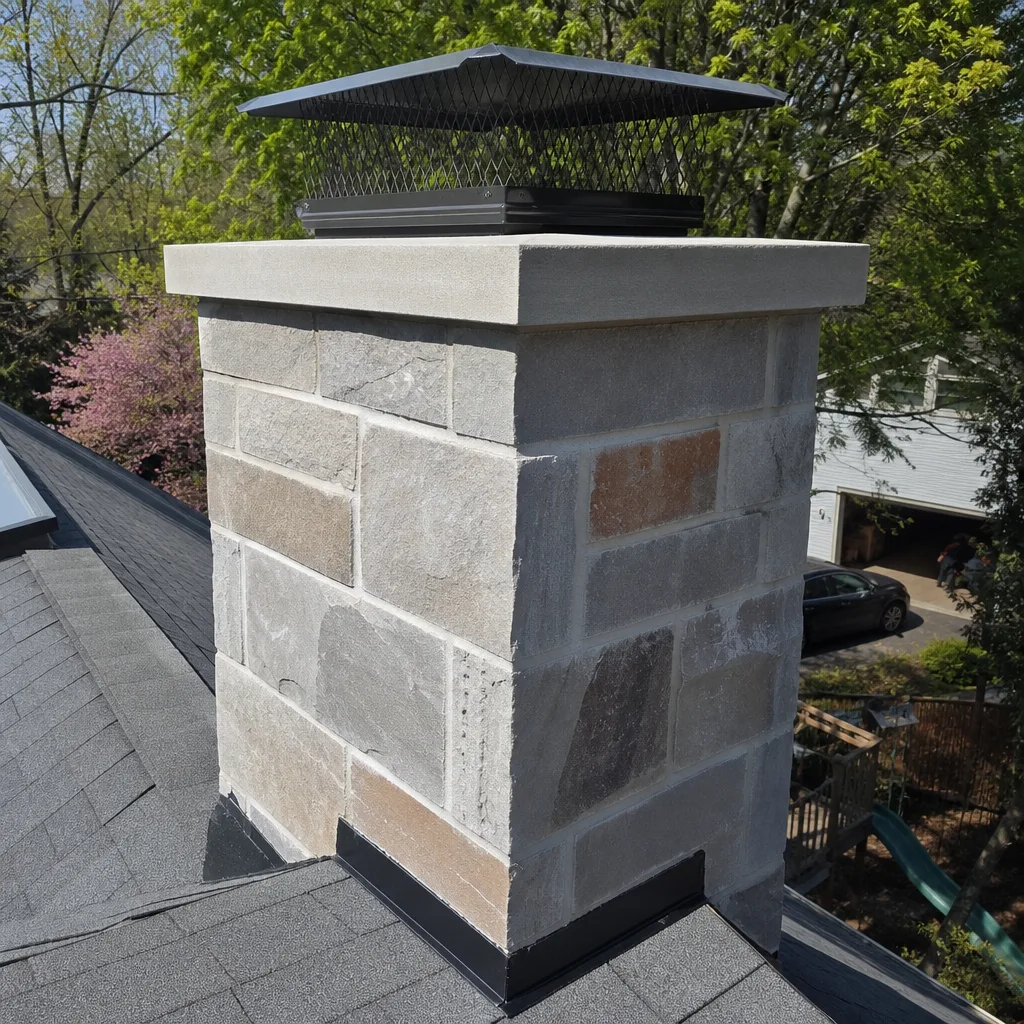 After
After Before
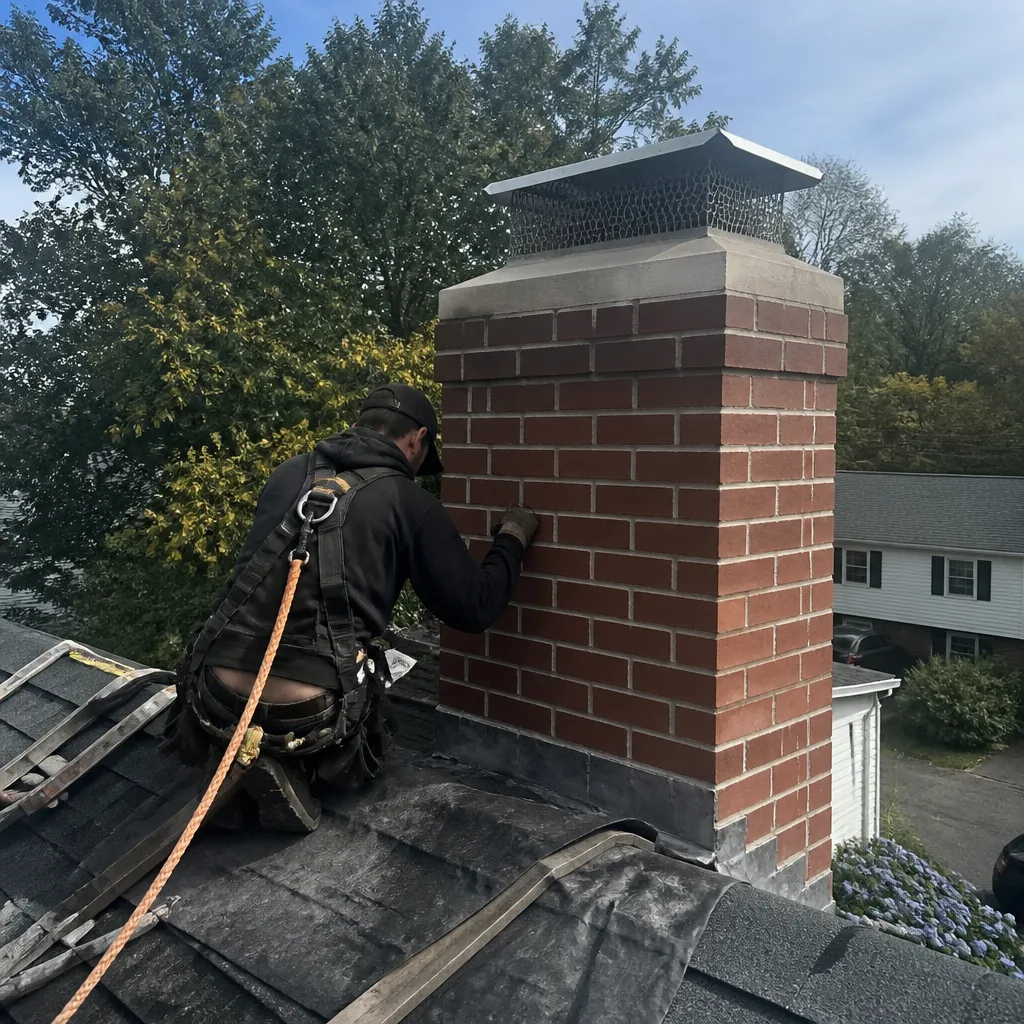 After
AfterChimney Cleaning Warning Signs: A Annapolis Homeowner’s Reference Guide
Here’s the thing most warning-signs guides won’t tell you: by the time a chimney fire cracks your flue liner or smoke starts rolling back into the living room, the problem has been developing for months, sometimes years. The signals that actually give you time to act are quieter. A damper that fights you. A smoke smell in an upstairs bedroom with no fire burning. White staining on the brick above the roofline. If you know what these mean, you can fix a $75 draft problem instead of a $4,000 liner rebuild. If you don’t, you’ll join the long list of Annapolis homeowners who found out the hard way that chimneys don’t fail suddenly. They fail slowly, then all at once. This guide walks through every early warning sign, what it actually means, and when you can safely wait versus when you need a sweep to look before you light another fire. For The Complete Guide to Chimney Cleaning in Annapolis with deeper maintenance advice, see our companion resource.
Quick Answer
The most important chimney warning signs in Annapolis homes are a smoke smell when no fire is burning, a damper that’s harder to open than it used to be, white salt staining (efflorescence) on exterior brick, creosote deposits you can see in the firebox that are dark, shiny, or tar-like, and water stains on ceilings or walls near the chimney chase. If you notice any of these, stop burning and get a professional inspection before your next fire. Most of these signals appear six to twelve months before a serious failure, which means catching them now costs a fraction of what waiting until January will cost.
Table of Contents
- The Smoke Smell With No Fire Burning
- A Damper That Fights Back
- White Staining on the Brick: Annapolis Efflorescence
- What Creosote Color and Texture Tell You
- Ceiling and Wall Stains Near the Chimney Chase
- Draft Problem or Liner Problem: The Candle Flame Test
- Exterior Signs Every Annapolis Homeowner Should Check
- Common Mistakes to Avoid
- When to Call a Professional
- Frequently Asked Questions
The Smoke Smell With No Fire Burning
A smoke smell in your house when the fireplace is cold is not a minor nuisance. It’s a draft reversal, a liner breach, or a blockage, and it is the same early signal that precedes carbon monoxide problems in houses where CO detectors weren’t placed correctly. Smoke lingers in the flue after every fire. When the chimney is drafting properly, that odor is pulled up and out. When something interferes with the draft, the smell seeps backward into the house, often showing up first in upstairs bedrooms because warm air and odors rise through the home’s envelope.
In Annapolis, we see this most often between October and December, when homeowners light the first fire of the season and discover that the chimney has been quietly accumulating creosote, debris, or even animal nests through the summer. The warm, humid Chesapeake air accelerates creosote absorption into the flue walls, which makes the odor stronger here than in drier climates. If you smell smoke with no fire burning, do not assume it’s “just the way old houses smell.” It’s a sign your flue is not venting the way it should, and the fix ranges from a $179 sweep to a serious liner repair depending on how long you’ve ignored it.
Other signs that accompany smoke odor and point to a draft problem:
- Cold air coming from the fireplace into the room on a windy day
- A slight haze or soot stains on the mantel that reappear after cleaning
- Your CO detector chirping or reading low-level CO when the heat runs
- Smoke alarms triggering in rooms with no fire and no cooking
- A stale, greasy odor near the fireplace that’s stronger in humid weather
Any of these on their own is worth a phone call. Two or more together means stop burning until a sweep looks at the flue.
A Damper That Fights Back
Your damper should open and close smoothly with one hand. If it’s starting to stick, grind, or require real muscle to move, that’s not normal wear and tear. It’s usually one of three things: creosote buildup on the damper plate and frame, rust from moisture intrusion, or heat warping from years of over-firing the fireplace. All three are fixable, but all three get more expensive the longer you wait. A damper that won’t fully close lets heated air escape up the chimney all winter, costing you real money on heating bills. A damper that won’t fully open sends smoke into the room on the first cold night.
In Annapolis specifically, rusted dampers are common because of the humidity and the salt air that works its way into the flue. We’ve pulled dampers out of chimneys in Eastport and Hillsmere that looked like they’d been sitting in a tidal pool. A rusted damper is more than an inconvenience; it means moisture is getting into the flue from somewhere, and that same moisture is doing damage to the masonry and the liner that you can’t see from the living room. If the damper has become stiff or noisy in the last year, that’s your cue to have the chimney looked at before you light the first fire of the season. Replacing a damper is straightforward for a sweep. Rebuilding a flue that’s been silently rusting for five years is not.
White Staining on the Brick: Annapolis Efflorescence
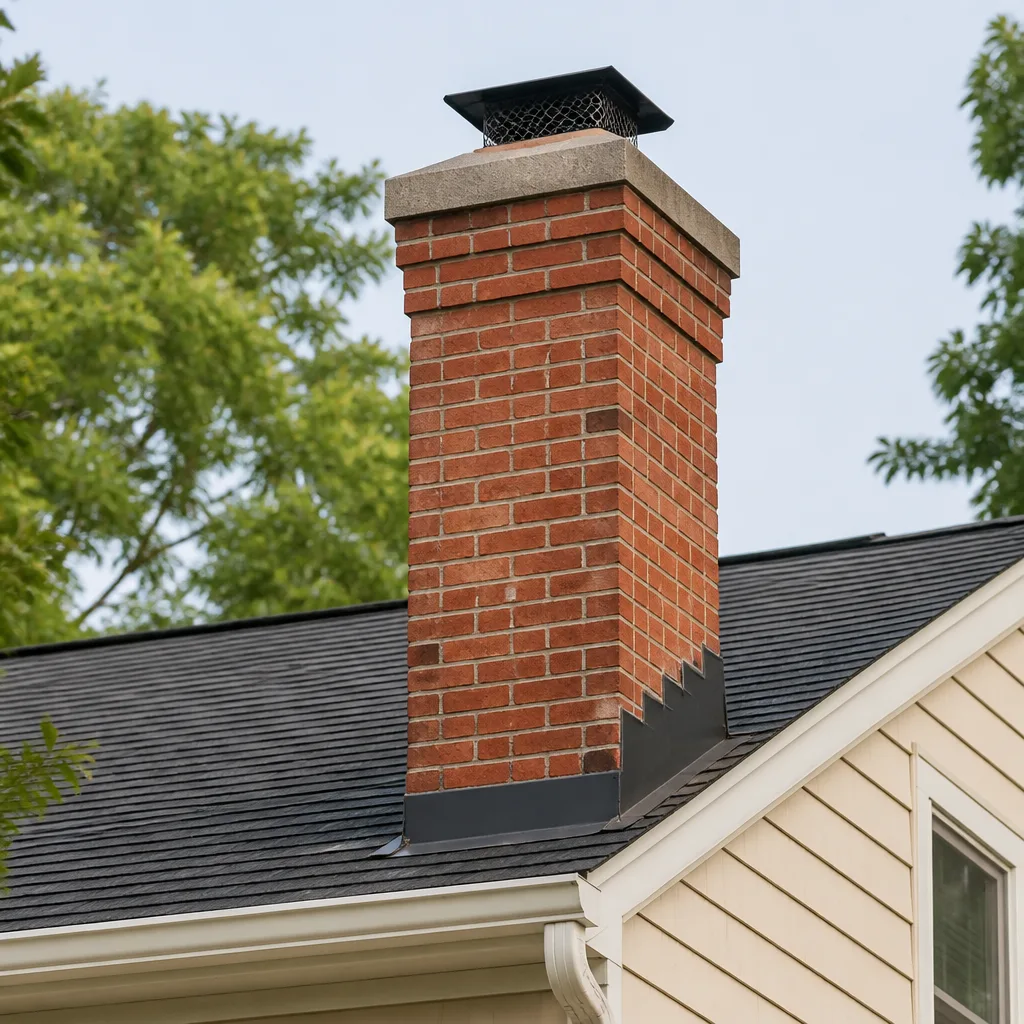
White, chalky staining on the exterior brick of your chimney is called efflorescence, and it is more common in Annapolis than in most inland communities. The reason is simple: the Chesapeake Bay creates a humid, salt-laden atmosphere, and Annapolis brick absorbs that moisture more readily than brick in, say, Davidsonville or Bowie. Efflorescence is water-soluble salt being carried to the surface of the brick by water that is moving through the masonry. When the water evaporates, it leaves the salt behind as a white, powdery deposit.
Here’s what matters: efflorescence is not cosmetic weathering. It is evidence that water is getting into your chimney structure, and the directions that water travels inside your brick can be far more damaging than what you see on the outside. In Annapolis homes built in the 1950s through 1980s - which describes a large share of the housing stock in neighborhoods like Murray Hill, Homewood, and Admiral Heights - the original masonry was often done with lime-based mortar that is now deteriorating. Once the mortar joints start to fail, water enters, and the efflorescence appears. The white stain is the first visible sign. The structural damage comes later.
How to tell if efflorescence is a problem or just old age:
- Check how widespread it is. A small patch near the bottom of the chimney is less urgent than staining that reaches above the roofline.
- Look at the mortar joints. If they’re crumbling, flaking, or have visible gaps, water is actively working through them.
- Check inside. Water staining on the firebox walls or a persistent damp smell inside the fireplace confirms moisture intrusion.
- Time it. If the efflorescence appears or worsens after rain or humid stretches, it’s active moisture movement, not old staining.
In our experience, Annapolis homeowners dismiss efflorescence more often than any other chimney warning sign. It doesn’t look dangerous, and it’s on the outside of the house where no one thinks about it. But that white stain is the same mechanism that eventually causes crown cracks, spalling brick, and liner deterioration. If you see it, get it checked. A crown seal repair now costs far less than a full rebuild later.
What Creosote Color and Texture Tell You
Look into your firebox after a few fires and you’ll see creosote. The color and consistency of that creosote is the single most useful early warning system a homeowner has. Creosote forms in three stages, and each stage tells you something different about how your chimney is performing.
First-degree creosote is a light, dusty, flaky material that brushes off easily. Brown or gray in color, it’s normal and manageable. If that’s what you see, your burning habits are reasonable and your flue is drafting well. A standard sweep once a year handles it.
Second-degree creosote is the stage most Annapolis homeowners are sitting in without knowing it. It’s dark, thick, and looks like crunchy black flakes or granola stuck to the flue walls. It’s harder to remove and it means your fires are burning cooler than they should, either because the wood isn’t seasoned or because the flue is oversized for the fireplace. Second-degree creosote is not an emergency, but it’s a clear signal that your burning habits or your chimney design are working against you. It builds up faster than you think. We regularly sweep flues in homes around Annapolis that haven’t been cleaned in two years and find second-degree creosote a half-inch thick. That’s when you’re one hot fire away from a problem.
Third-degree creosote is the one that means stop burning immediately. It looks like a shiny, tar-like glaze that has baked onto the flue walls. It is highly concentrated fuel, and it burns at extremely high temperatures once it ignites. If you can see glazed, shiny black material in your firebox or on your damper, do not light another fire. Call a sweep. Third-degree creosote usually requires chemical treatment or mechanical removal with specialized tools, and it is the leading cause of chimney fires in Anne Arundel County homes. The easiest way to avoid it is to sweep before the creosote gets to this stage, which is why the old advice holds: once a year, burn or no burn. Chimneys break in the off-season too.
Ceiling and Wall Stains Near the Chimney Chase
Brownish stains on the ceiling near your chimney, subtle discoloration on the wall where the chimney runs through the second floor, peeling paint, soft drywall, even a slight bowing in the wall - most homeowners attribute these to roof leaks, plumbing, or “old house stuff.” In many cases around Annapolis, the chimney is the culprit and the chase is hiding the evidence.
The chimney chase is the framed, often drywalled enclosure that surrounds the flue pipe in many homes, especially in neighborhoods built from the 1970s onward, like Cape St. Claire or parts of Parole. Water that enters through a damaged crown, failed flashing, or cracked brick runs down the outside of the flue pipe inside that chase. It soaks the surrounding framing and drywall. By the time the stain appears on your living room ceiling, the leak has been active inside the chase for weeks or months.
The order of investigation we use, and that a homeowner can follow, is this:
- Rule out an active roof leak. Check the attic directly under the roofline near the chimney for wet insulation or damp framing.
- Rule out a plumbing leak. If there are pipes in the wall near the chimney, confirm they’re dry.
- Touch the wall near the chase on a humid day. If it feels cool or damp in a specific vertical line, water is likely tracking down the flue’s exterior.
- Check the masonry outside at the same height as the interior stain. Efflorescence, cracked crown, or missing flashing at that level confirms the source.
If steps one and two are clean and step three or four shows evidence, the chimney is your source. The fix depends on where the water is entering, but the key is catching it before mold sets in or the framing rots. We’ve opened chases in Annapolis homes where the flue pipe was surrounded by water-damaged framing and the homeowner had spent two years repainting the ceiling stain thinking it was condensation. Your flue doesn’t care how the fire looks. It cares how it breathes, and it cares where the water goes.
Draft Problem or Liner Problem: The Candle Flame Test
This section answers the question every homeowner asks when something seems off with the fireplace: is this a simple draft issue that a sweep can fix for a couple hundred dollars, or is it a structural liner problem that means real money? There is a simple test you can do at home that gives you a good first read.
The candle flame test:
- Open the damper fully and make sure the fireplace is cold.
- Light a candle or a long match and hold it just inside the firebox opening, near the center.
- Watch the flame carefully.
If the flame leans into the firebox and up toward the flue, your draft is working. That doesn’t mean the flue is clean, but it means the chimney’s basic draw is intact. If the flame flickers, wavers, or blows back into the room, you have a draft problem. In most cases around Annapolis, a draft problem is caused by one of these, listed roughly in order of frequency we see and cost to fix:
- A dirty flue - creosote or debris reducing the flue’s diameter and disrupting airflow. Fix: a sweep, typically $175 to $300 in the Annapolis market.
- Negative air pressure in the house - exhaust fans, a running furnace, a tight building envelope all competing for the same air the fireplace needs. Fix: crack a window near the fireplace, address the pressure issue, or install a make-up air solution. Cheap to diagnose, variable to fix.
- A poorly sized flue - the chimney was built for a different fireplace or the insert has changed. Fix: a flue liner adjustment or resizing. Moderate cost.
- A partially collapsed or cracked flue liner - this is the structural problem, and it usually shows up after the draft has been weak for a while. Fix: a liner assessment and likely a new flue liner, which runs into the thousands in Annapolis depending on the home’s roofline and the flue’s condition.
The candle test does not replace a professional inspection, but it gives you a first approximation. A draft problem you can often solve cheaply. A liner problem you cannot afford to guess about. If the candle flame is unsteady and the fireplace has a history of smoke backup, have a sweep run a camera up the flue. The camera footage and a plain-English verdict - every time, no exceptions. That’s the only way to know which of the four you’re dealing with.
Exterior Signs Every Annapolis Homeowner Should Check
Annapolis has a particular combination of weather that makes exterior chimney inspections more important here than in most of the mid-Atlantic. We get freeze-thaw cycles in the winter, high humidity and salt air in the summer, and a steady mix of rain throughout the year. That means water is always finding its way into masonry, freezing, expanding, and doing damage slowly. Here’s what to look for from the ground or with a pair of binoculars.
Missing or damaged chimney cap. The cap keeps rain, animals, and debris out of the flue. A missing cap is an open invitation for squirrels, raccoons, and birds to nest in your chimney. In Annapolis neighborhoods with mature trees - you know which ones they are - animal intrusion is one of the most common reasons smoke starts backing up in the fall. A cap replacement is inexpensive and prevents far more expensive animal removal and flue cleaning. We install caps from brands like Gelco and Copperfield because they hold up to the salt air better than the cheap sheet-metal caps sold at box stores.
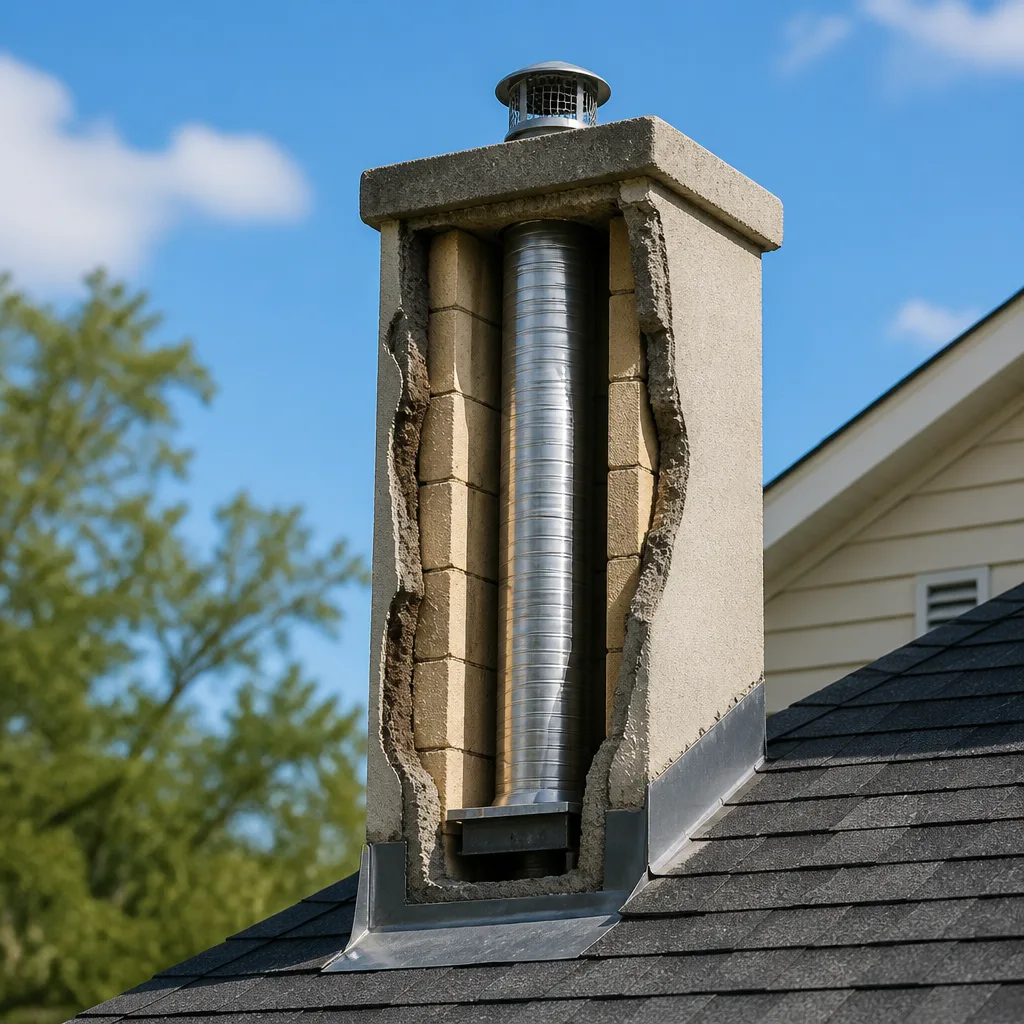
Cracked or crumbling crown. The crown is the concrete or mortar slab at the very top of the chimney. Its job is to shed water. When it cracks, water gets into the brick and the flue. Crown cracks are one of the most common Annapolis chimney problems the local climate causes, and they are easy to miss because you rarely look at the top of the chimney. If the crown is cracked, sealing or rebuilding it is a far cheaper fix than repairing water damage to the flue’s interior.
Spalling brick. Spalling means the brick faces are popping off, leaving the softer interior of the brick exposed. You’ll see brick chips on the ground near the chimney or the roof, and the bricks themselves look pitted. This is often the end stage of years of water intrusion. Spalling brick needs professional attention because it signals deeper structural deterioration. In Annapolis, take it seriously - exposed brick absorbs moisture even faster, accelerating the damage.
Rust on the damper or in the firebox. We touched on this earlier. Rust means water is entering the flue. Any rust you can see from inside the house means there’s more you can’t see higher up. The water has to be coming from somewhere: a cracked crown, failed flashing, a compromised cap, porous brick. Find the source, fix it, then deal with the rust. Use HeatShield or a DuraFlex liner only after the water intrusion source is addressed; otherwise the new liner will be compromised by the same moisture.
If any of these exterior signals are present, the right move is a chimney inspection. A camera run up the flue can show you exactly what’s happening without any guesswork, and an honest sweep will tell you plainly when work can wait and when it can’t.
Common Mistakes to Avoid
- Lighting a fire to “burn off” creosote. A hot fire does not clean your chimney. It risks igniting the creosote that’s already there. Burning off creosote is not a cleaning method, it’s a chimney fire waiting for the right conditions.
- Assuming no fires means no problems. Chimneys deteriorate in the off-season too. Moisture, animals, and freeze-thaw cycles work on your flue all year. Once a year, burn or no burn.
- Ignoring a smoke smell if it’s “not that bad.” That smoke odor is moving through your home’s air channels, and it’s a draft or liner signal. It does not go away on its own. It gets worse as the creosote builds and the liner degrades.
- Painting over efflorescence with latex paint. Painting brick traps moisture inside the masonry, which then deteriorates faster. Efflorescence can’t be painted away. The source of the water has to be addressed. In Annapolis humidity, painted brick is a slow structural problem in the making.
- Hiring based on a phone quote without a camera inspection. A liner cannot be accurately assessed from the outside, and any sweep who gives a firm liner price without so much as looking inside the flue is guessing. If someone quotes a liner to you over the phone, hang up and call someone who will put a camera up first.
- Waiting until November. Every sweep in Anne Arundel County is booked solid once the weather turns. The homeowners who schedule in August and September get their pick of times and avoid the rush. The ones who wait until a cold snap pay the same price but wait longer. In Annapolis specifically, schedule your sweep by mid-September.
When to Call a Professional
Call a sweep if you notice a smoke smell with no fire, a damper that fights you, persistent efflorescence, visible creosote that’s dark or shiny, water stains near the chimney chase, or exterior brick that’s cracking or spalling. Any of these is enough to warrant a professional look. A camera inspection shows you exactly what’s happening inside the flue, which removes the guesswork and the fear that you’re being sold something you don’t need. At Top Hat Chimney, we’ve worked Annapolis chimneys since 1999, and we’ll tell you plainly when a sweep is all you need and when the liner actually has to come out. The camera footage doesn’t lie, and neither will we. Estimates are free. Call (240) 851-3653.
Frequently Asked Questions
A standard chimney sweep in Annapolis typically runs between $175 and $300 depending on the flue’s size, its condition, and whether animal removal or heavy creosote treatment is needed. If a sweep finds significant creosote buildup or an animal nest, the price goes up because the job takes longer and requires additional equipment. A camera inspection is usually a small add-on and worth it because it shows you the flue’s actual condition. Cheap sweeps that undercut the market are often bait for upsell at the door, which is exactly the game Top Hat Chimney doesn’t play - upfront pricing is built into how we work.
Once a year, burn or no burn. That’s the industry standard and it holds in Annapolis even for homeowners who only light a fire a few times each winter. The reason is that creosote, animal intrusion, and masonry deterioration all occur whether or not you’re burning, and a yearly inspection catches them before they become problems. If you burn more than three cords of wood per season, sweep twice. If you burn only occasionally but the chimney is old or the flue is unlined, stick with the yearly schedule. The cost of a sweep is a fraction of the cost of a liner rebuild, and skipping it is the most common reason Annapolis homeowners end up in repair territory.
Only if the existing liner is cracked, collapsed, or missing, and the only way to know that is with a camera inspection. Some companies quote new liners without ever looking inside the flue, and that’s not an honest basis for a multi-thousand-dollar decision. At Top Hat Chimney, the rule is simple: the camera footage and a plain-English verdict, every time. If the liner is intact and the draft is fine, you don’t need a new one. If the camera shows cracks or a partial collapse, then it’s time to talk about what a DuraFlex or HeatShield liner install actually costs in Annapolis. But we will never recommend it without the evidence in front of you.
Creosote keeps building, moisture keeps working, and whatever small problem is forming gets bigger. Skipping a sweep doesn’t save money; it defers a smaller expense into a larger one. The creosote that’s burning slowly now becomes third-degree glaze that’s a chimney fire risk. The tiny crack in the crown becomes a water intrusion path that damages the liner and the framing. The animal nest from this spring becomes the blockage that sends smoke into the house in December. None of this happens suddenly, which is why it’s easy to ignore, but every stage costs more than the one before it. In Annapolis, where the humidity accelerates masonry deterioration, skipping one year is tolerable. Skipping two is a pattern. Skipping five is a rebuild.
You can buy a brush at the hardware store and run it up the flue, but here’s what you won’t get: a camera inspection, a proper creosote assessment, and the training to recognize a liner crack, a failed crown, or moisture damage that’s hidden from the firebox. You’ll also be doing it from a ladder on an Annapolis roof, and roof work is a risk that isn’t worth a $200 savings. A professional sweep includes a thorough inspection that catches the early warning signs this guide has described. If you’re going to do it yourself, at least have a professional inspect the flue first so you know what you’re working with. Otherwise, the money you save is a bet against the things you can’t see.
Wind-driven smoke backup usually means the flue is too short, the cap is missing or undersized, or the chimney’s draw is being overcome by pressure differentials around the house. Annapolis gets strong gusts off the Bay, especially in neighborhoods like Bay Ridge or along the water, and those gusts can create downdrafts that push smoke back down the flue. A properly sized cap, a flue extension, or a draft-inducing cap can often solve it, but the first step is a camera inspection to rule out a more serious draft obstruction. If the flue is clean and the cap looks fine, the wind itself is the issue and the fix is usually straightforward. Call a sweep and describe what you’re seeing; it helps to know which wind direction triggers it.
The Bottom Line
The signs that matter are not the dramatic ones. They’re the smoke smell on a calm day, the damper that’s harder to move, the white stain on the brick, the dark creosote in the firebox, the water mark on the ceiling. Each of these appears early enough to act cheaply, and each one gets more expensive when ignored. Annapolis homes face a particular set of conditions - salt air, humidity, freeze-thaw cycles - that make regular chimney attention a practical necessity rather than an optional chore. The right sequence is simple: check for these signs, get a camera inspection if anything looks off, and sweep once a year whether you burn or not. A chimney that’s well maintained will keep doing its quiet job for decades. A chimney that’s ignored will tell you, eventually, in the most expensive way possible. Listen to it early.
Written by Wendell Pike, Owner at Top Hat Chimney, serving Annapolis since 1999. For a free estimate or to schedule a Chimney Cleaning & Sweep in Annapolis, call (240) 851-3653.