
Last updated September 11, 2026
Level 1 sweep and inspection to the NFPA 211 annual standard - flue, crown, cap, and flashing checked and photographed
Chimney sweep logs do not sweep chimneys. They loosen some creosote - which then falls where a brush and vacuum still have to collect it.


 Before
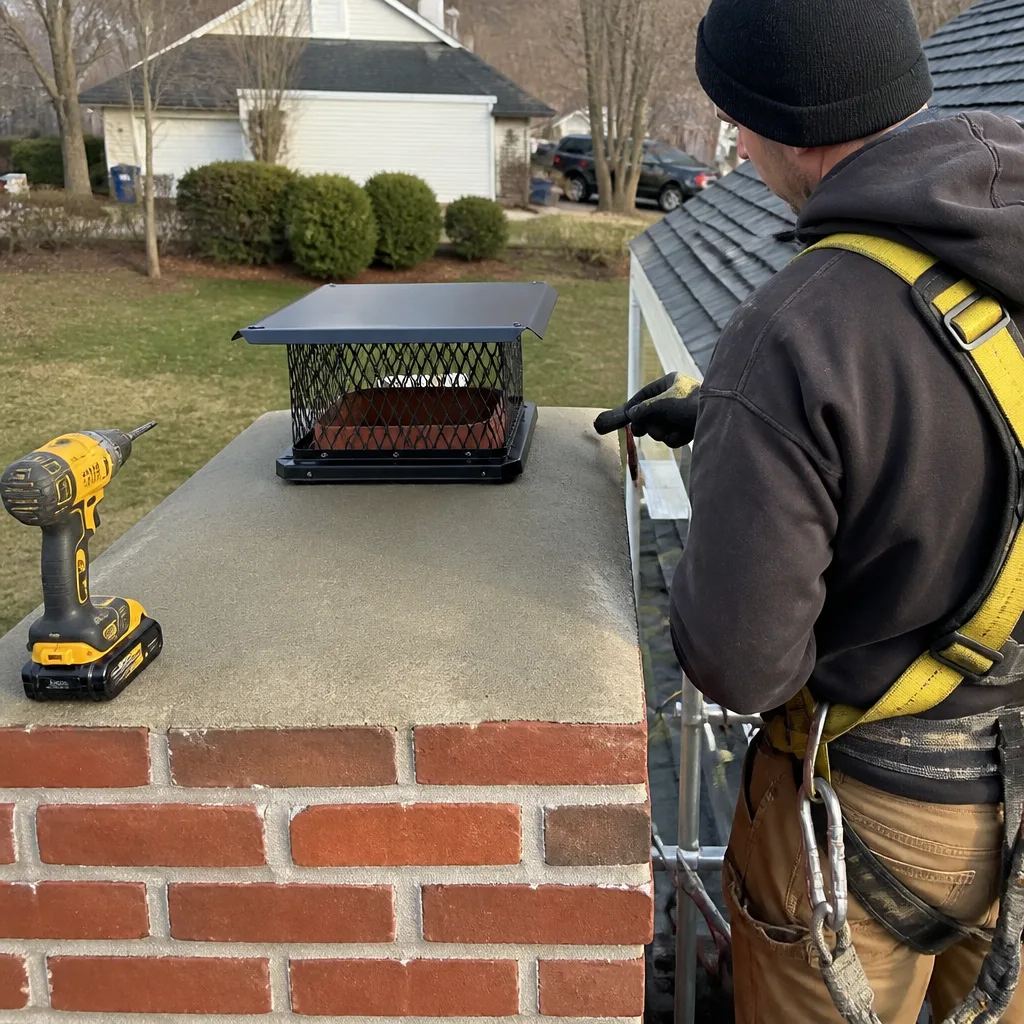 After
After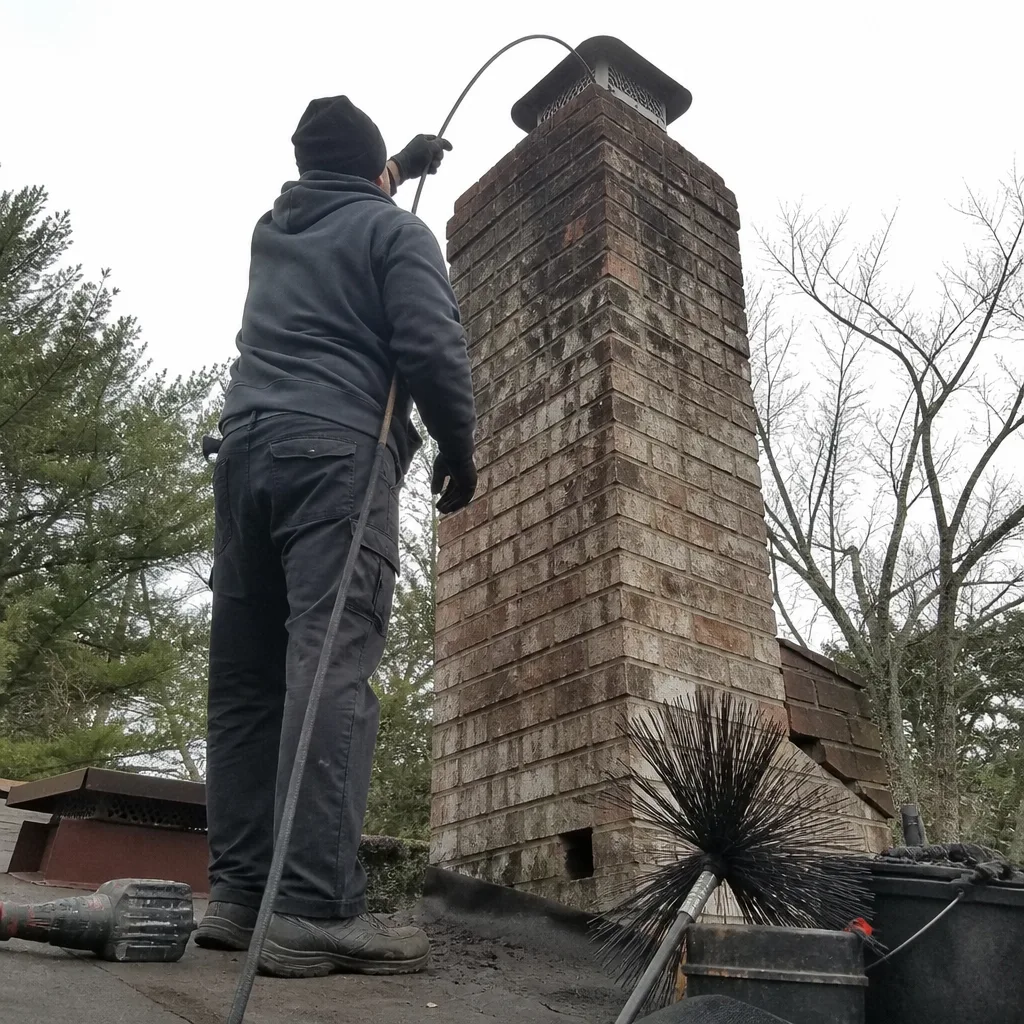 Before
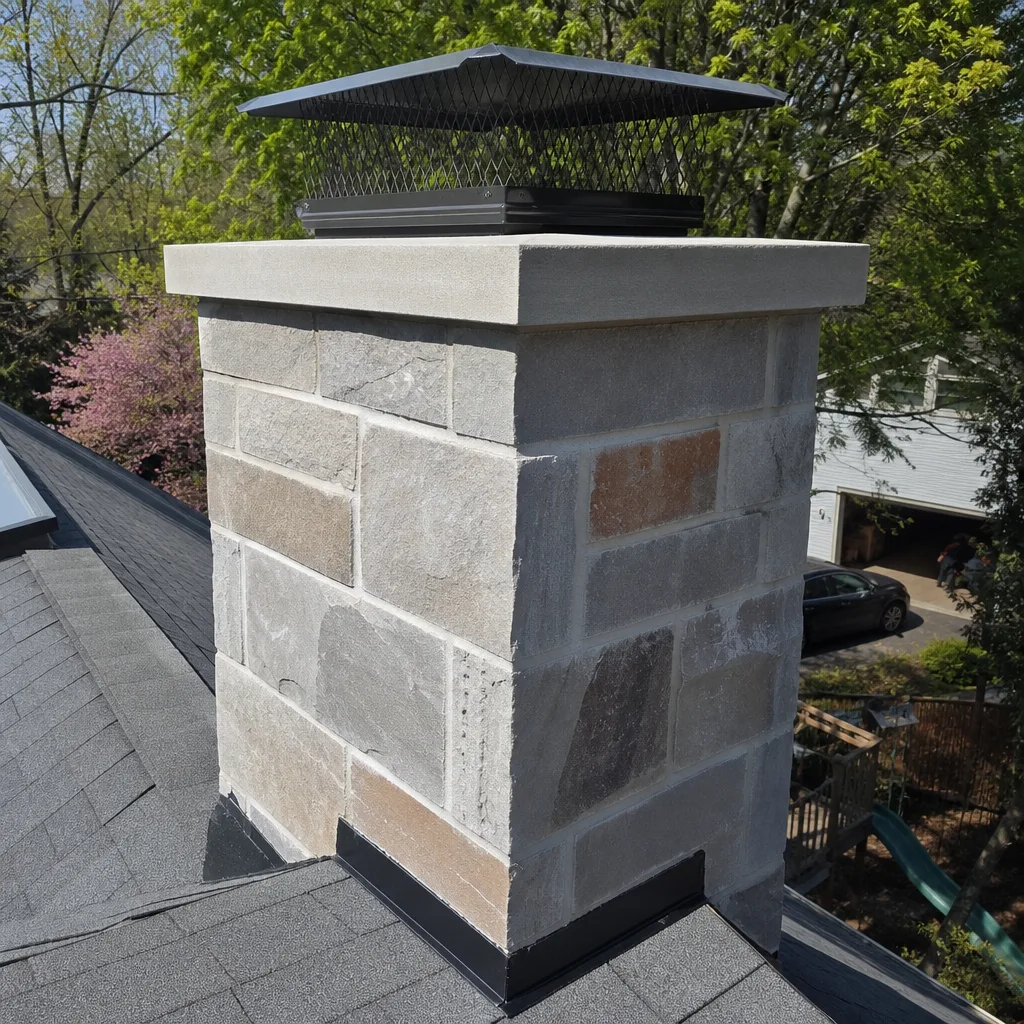 After
After Before
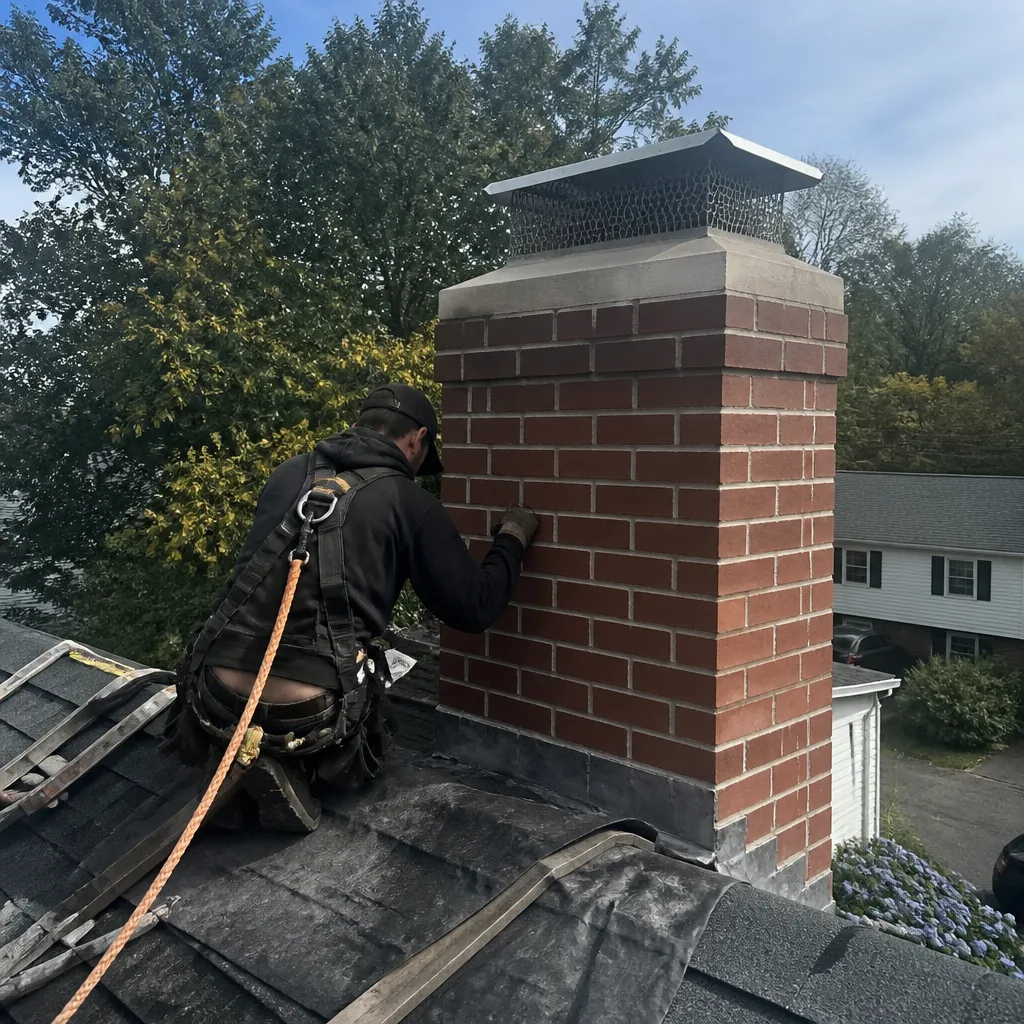 After
AfterDIY vs Professional Chimney Cleaning: The Annapolis Homeowner’s Decision Guide
You can brush a chimney flue yourself and have it look clean, but without a camera drop, you won’t see the offset joint at the third-floor elbow where gases have been leaking into your wall cavity for two seasons. That’s the part that matters. Most Annapolis homeowners who ask us about DIY chimney cleaning aren’t really asking whether they can push a brush up a flue. They’re asking whether they can skip the $200 service fee without missing something that will cost them $6,000 later. This guide walks through what DIY cleaning actually accomplishes, what it structurally cannot, and the four questions that determine which approach fits your house in Annapolis. For How to Hire a Chimney Cleaning Contractor in Annapolis: A Step-by-Step Guide, see our companion resource.
Quick Answer
DIY chimney cleaning is genuinely reasonable for a handful of Annapolis homes: a straight flue, light seasonal use, a homeowner who knows the house well and isn’t afraid of a ladder. But most houses in this area are older, with clay tile liners, offset flues, or conversions from oil to gas, and those conditions mean a brush kit gives you a clean-looking flue without telling you whether the liner is cracked, the joints are leaking, or the cap is failing. If your house falls into that second category, the money you save on DIY is a gamble against repairs that cost ten to thirty times the price of a sweep.
Table of Contents
- What DIY Chimney Cleaning Can Legitimately Accomplish
- When DIY Is a Bad Idea in Annapolis Specifically
- The Equipment Reality: What DIY Actually Costs
- What a Professional Finds That DIY Structurally Cannot
- The Four-Question Decision Framework
- Common Mistakes to Avoid
- When to Call a Professional
- Frequently Asked Questions
What DIY Chimney Cleaning Can Legitimately Accomplish
Let’s be straight about this: brushing a chimney is not rocket science. A homeowner who is comfortable on a ladder, owns or rents the right equipment, and takes the time to do it properly can remove first-degree creosote from a straight flue. That’s a real thing. First-degree creosote is the dusty, sooty film that builds up from consistent, relatively cool fires. It brushes off with a wire or poly brush, and if that’s all you’re dealing with, your chimney doesn’t need a professional every single time. We tell homeowners this because it’s true.
What DIY brushing does well:
- Removing Stage 1 creosote from a straight, unlined or stainless-lined flue in a house with light, consistent use.
- Clearing loose soot and small debris that has fallen from the cap or crown into the firebox.
- Checking the visible firebox for obvious cracks in the refractory panels or firebrick.
- Verifying that the damper opens and closes and that the flue isn’t obstructed by a bird’s nest or squirrel debris within reach.
In a house you know well, one you’ve burned in for a decade, where the chimney is a simple vertical pipe and you burn maybe a cord of seasoned hardwood a year, a DIY cleaning every season is defensible. You’ll still benefit from a professional inspection every two or three years, but the routine maintenance itself is within reach.
The key word is straight. The moment a flue offsets, elbows, or passes through a second story, the brush you’re pushing from below is not reaching the entire interior surface. You’re polishing the lower third and hoping the upper two-thirds are fine. In Annapolis, where a large share of the housing stock predates 1980, straight flues are the exception, not the rule. Most of the chimneys we see in neighborhoods like Murray Hill, West Annapolis, and Admiral Heights have offsets, multiple wythes of brick, and clay tile liners that have been doing the job since the Eisenhower administration. That changes the calculus, and we’ll get to why.
When DIY Is a Bad Idea in Annapolis Specifically
Annapolis has a specific housing profile that makes DIY chimney work riskier than it is in, say, a 2005 subdivision in Crofton or a newer build in Arnold. The older the house, the more likely the chimney was built with clay tile liners, and clay tile liners crack. They crack from thermal stress, from moisture, from the freeze-thaw cycles that chew through masonry in the Chesapeake watershed, and from simple age. A cracked clay liner is not something you’ll see with a brush and a flashlight. You’ll see it with a camera pushed to the top of the flue.
Conditions that make DIY genuinely inadvisable in Annapolis:
- Clay tile liners installed before 1990. These are standard in the older sections of Annapolis and in the surrounding waterfront communities. If your house has one, unseen cracks are not a possibility; they’re a probability. The question is how many and where.
- Oil-to-gas conversions. A lot of Annapolis homes burned oil for decades, then converted to gas in the 1980s or 1990s without relining the chimney. Gas exhaust is cooler and wetter than oil exhaust, and it degrades old mortar joints faster. If your house made that switch, the flue needs a professional’s eyes, not just a brush.
- Any insert or stove added to an existing masonry system. Inserts change the draft profile and temperature profile of a flue. They also make DIY access harder. A homeowner adding a wood stove to a masonry chimney not built for one is the single most common scenario we see for hidden damage in Anne Arundel County.
- Chimneys with offsets or multiple stories. If you cannot see straight up the flue with a flashlight from the firebox, you cannot clean the entire flue from the bottom. That’s not a skill gap; it’s geometry.
- History of leaks, water stains on the ceiling near the chimney, or efflorescence on the exterior brick. Those are symptoms of system failure, not dirt. Brushing the flue doesn’t address them.
If your house checks one or more of those boxes, the question isn’t whether DIY cleaning saves you money. The question is whether you’re okay not knowing what’s happening inside the flue. For most Annapolis homeowners with older houses, that’s not a bet worth making.
The Equipment Reality: What DIY Actually Costs
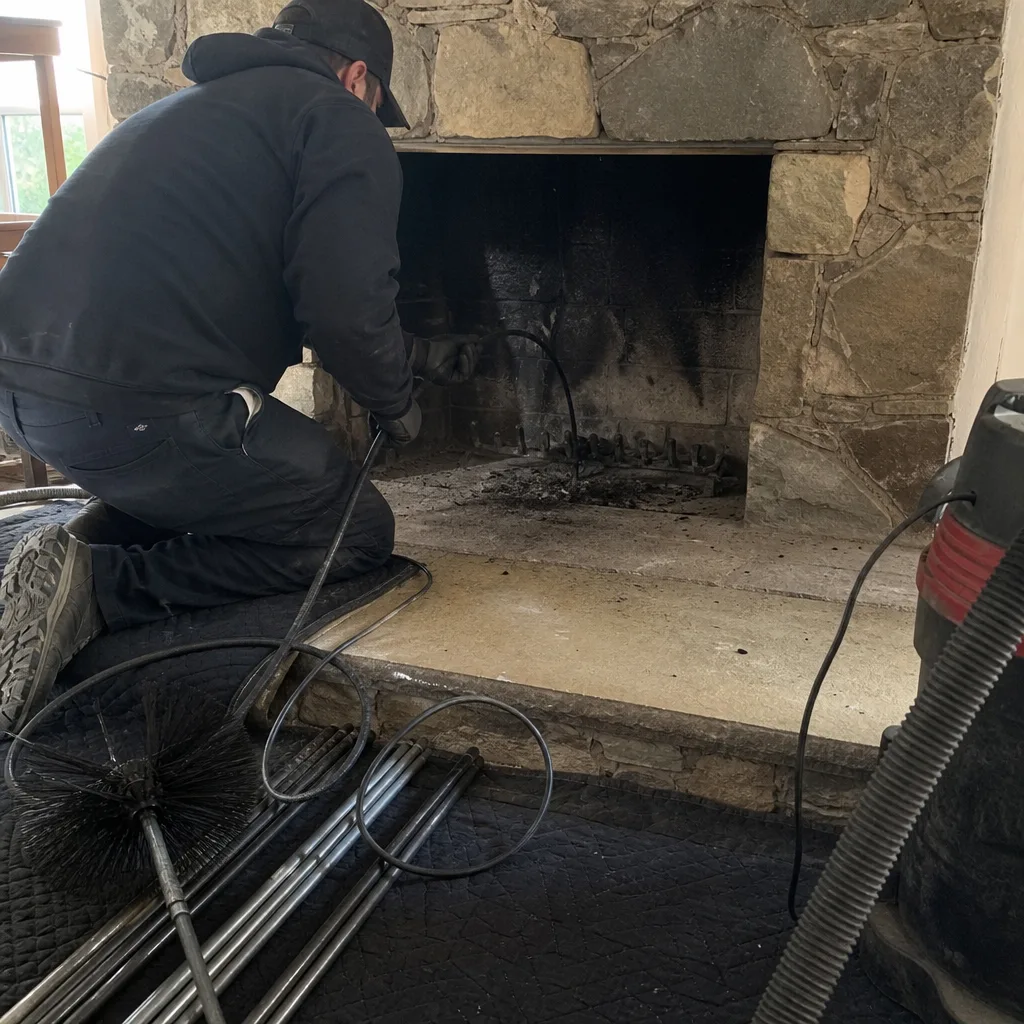
The math on DIY chimney cleaning is narrower than most online guides admit. You can’t do the job properly with a broom handle and a wire brush from the hardware store. A proper setup looks like this:
- Chimney brush kit with rods (poly or wire, sized to your flue): $60 to $120
- Drop cloths and plastic sheeting to contain the dust: $20 to $40
- HEPA vacuum (regular shop vacs blow fine creosote dust back into the room): $80 to $150 if you don’t already own one
- Inspection mirror and flashlight: $25 to $50
- Ladder and roof access gear if you’re working from the top down: $100 and up if you need to buy it
So the first DIY cleaning runs you roughly $150 to $250, assuming you buy the whole kit. After that, each additional cleaning is nearly free, which is the argument for DIY: the annual cost after year one approaches zero. But that’s only true if the flue is straight, the liner is sound, and you’re not missing anything. In Annapolis, where the average chimney service call turns up at least one maintenance item, a DIY-only approach saves you $200 a year against the possibility of a $4,000 to $8,000 liner replacement you could have caught early. See our Chimney Cleaning Cost Breakdown: The Annapolis Homeowner’s Reference for 2026 for detailed pricing. The math only works if nothing is wrong, and the only way to know nothing is wrong is to look with tools most homeowners don’t own.
We’re not saying never DIY. We’re saying run the actual numbers, including the deferred-inspection risk. A camera inspection every few years plus DIY brushing in between is a genuinely reasonable middle path for a house with a simple system. It’s not the path for most Annapolis homes, but it exists, and we’ll tell you if it’s right for yours.
What a Professional Finds That DIY Structurally Cannot
The real value of a professional chimney cleaning isn’t the brushing. The brushing is the easy part. The value is the diagnosis that happens before and after the brush goes up. A trained sweep in Annapolis is looking at five things a homeowner with a brush kit physically cannot assess:
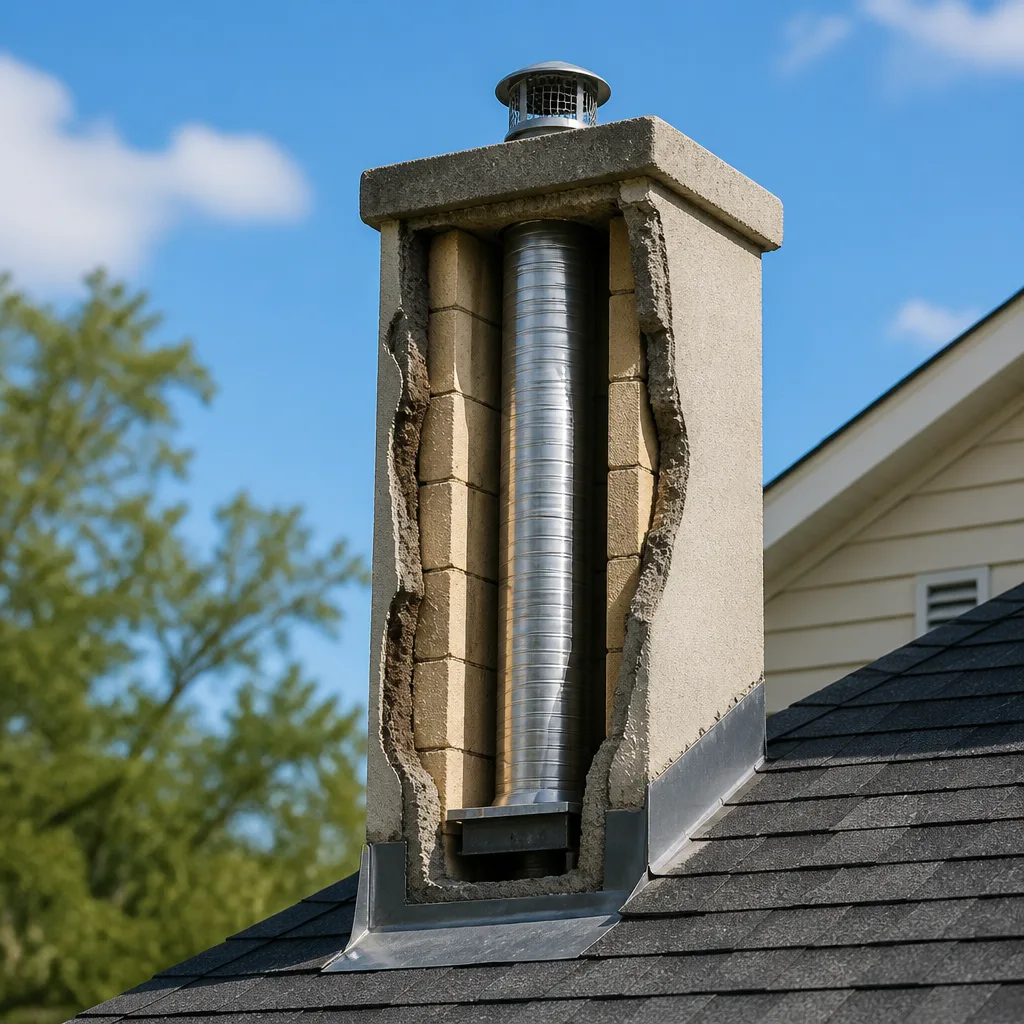
- Liner integrity. A camera drop reveals cracks, spalling, and separated joints in clay tile liners, and gaps or corrosion in stainless liners. None of that is visible from the firebox. We regularly find cracked tiles in Annapolis homes where the homeowner has been burning for years without symptoms. The gases don’t announce themselves.
- Offset joints. Where a flue elbows between stories, the joints are the first place leaks develop. A camera shows the exact condition of those joints. A brush just scrubs over them.
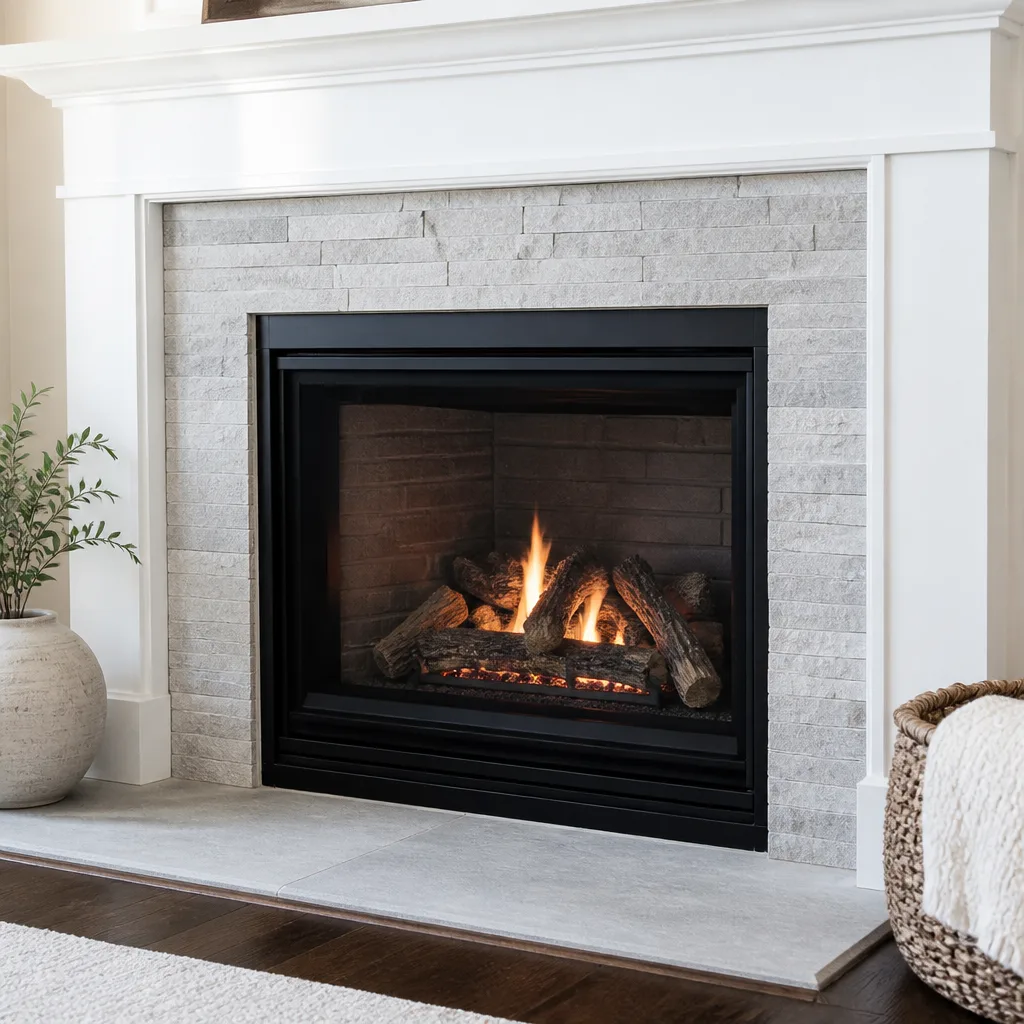
- Firebox refractory condition. The panels that protect the firebox walls degrade over time. A sweep knows what normal wear looks like and what’s about to fail. A homeowner sees a dark panel and assumes it’s supposed to look that way.
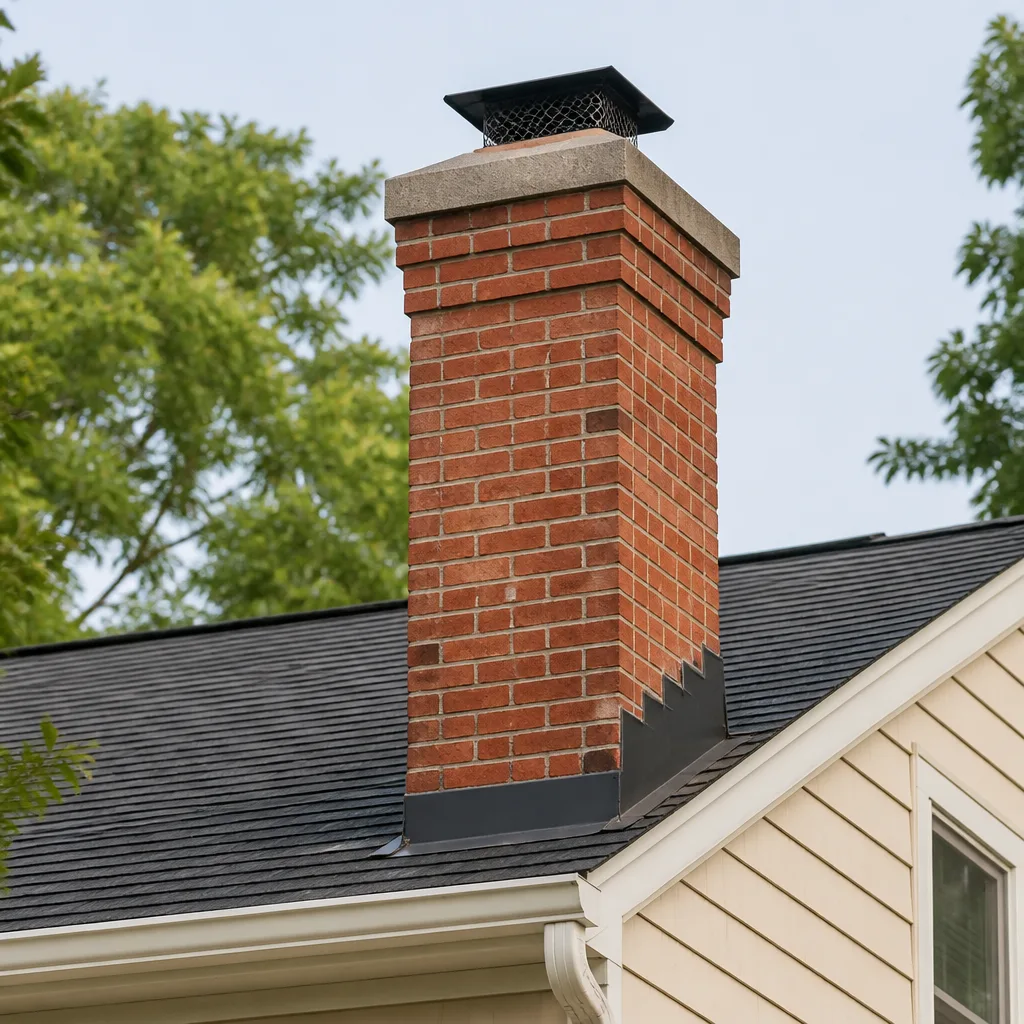
- Cap and crown status from the roof. The cap keeps rain, birds, and animals out. The crown is the concrete slab at the top of the chimney that sheds water. Both fail slowly and visibly, but only if you get on the roof or use a drone. Most DIY cleaning never involves roof access, so the structural top of the system goes unexamined season after season.
- Draft performance. A professional measures how the flue draws, both cold and after the fire is going. Poor draft is the cause of most smoke-in-the-house complaints and a lot of carbon monoxide backdrafting, and it has nothing to do with how clean the flue is.
Wendell has been inside more Annapolis chimneys than he can count, and the pattern is consistent: the houses that get professionally swept every year have small, manageable repairs caught early. The houses that go five or ten years between professional attention, or that only ever get DIY brushing, are the ones that need full liner replacements, crown rebuilds, or firebox reconstruction. Your flue doesn’t care how the fire looks. It cares how it breathes.
The Four-Question Decision Framework
Before you decide between DIY and professional chimney cleaning, answer these four questions honestly. There’s no wrong answer, but there is a wrong answer for your specific house.
- Is your flue straight or does it offset? Shine a flashlight up from the firebox. If you can see daylight at the top, the flue is straight. If you see brick or a curve, it’s offset. Straight flues are DIY-cleanable. Offset flues are not, because the brush won’t reach the upper sections. If you’re not sure, a professional camera inspection answers this in five minutes.
- What kind of liner do you have? If you have a stainless liner installed in the last 15 years, DIY brushing is low-risk. If you have clay tile, especially in a pre-1990 house, you need a camera inspection before anyone brushes anything. Brushing a cracked clay liner can worsen the damage. This is the single most important question for Annapolis homeowners.
- How much do you actually burn? If you use the fireplace three or four times a year with dry, seasoned wood, creosote accumulation is minimal, and a professional sweep (or careful DIY) is a once-a-year job at most. If you burn all winter, or if you burn green wood, unseasoned wood, or manufactured logs, creosote builds faster and gets into Stage 2 territory quickly, which is not a brush job.
- When did you last have a camera inspection? If the answer is “never” or “more than three years ago,” start there. Get the inspection first. Then decide whether the cleaning itself is DIY or professional. This order matters. Brushing first, inspecting later is how homeowners hide problems from themselves for years.
Once a year, burn or no burn. Chimneys break in the off-season too. That’s true whether you sweep it yourself or call us. The annual rhythm matters more than who holds the brush.
Common Mistakes to Avoid
- Assuming a clean-looking firebox means a clean flue. The firebox is the part you can see. The flue is the part you can’t. They are different systems with different condition profiles, and in Annapolis brick chimneys, the flue is always worse than the firebox.
- Using the wrong brush size or type. A brush that’s too small scrubs nothing. A brush that’s too large gets stuck, and a stuck brush in an offset flue is a service call you’ll pay more for than the sweep you were avoiding. Poly brushes are for stainless liners; wire brushes are for clay tile only.
- Neglecting the cap and crown. Most DIY cleaning never goes to the roof. That means the two components that protect your chimney from water get zero attention season after season. In Annapolis, with its steady rainfall and freeze-thaw cycles, water is the primary enemy of masonry, and the cap and crown are the first line of defense.
- Burning green or unseasoned wood. Green wood burns cooler and produces far more creosote, which means your chimney needs attention more often. A lot of Annapolis homeowners with DIY plans are also in the habit of burning whatever the tree guy left behind. The two don’t mix.
- Skipping the inspection entirely. DIY brushing gives you a cleaner flue without any information about whether the flue is still sound. A clean chimney with a cracked liner is still a dangerous chimney. The cleaning was never the point; the condition was.
- Trusting a national franchise’s door-knock “inspection.” The companies that go door to door in Annapolis neighborhoods, especially in the fall, are selling camera inspections that often produce a scary video and a five-figure quote for work that doesn’t need doing. Ask anyone on your street. Wendell has been called out to second-opinion these situations more times than he can count.
When to Call a Professional
Call a professional if your chimney has an offset, a clay tile liner, a history of water leaks, or a recent fuel conversion. Call if you smell smoke in the house after the fire is out, if you see efflorescence on the exterior brick, or if you notice staining on the ceiling near the chimney. Call if the last camera inspection was more than three years ago, or if you’ve never had one. And call if you’re simply not comfortable on a ladder with a brush kit and a HEPA vacuum and a tarp to clean up. None of that is failure; it’s judgment. Top Hat Chimney offers free estimates in Annapolis with no trip charge inside the county. Call (240) 851-3653 and Wendell or one of his crew will give you the camera footage and a plain-English verdict, every time, no exceptions.
Frequently Asked Questions
A standard chimney sweep in Annapolis typically runs between $180 and $320, depending on the height of the flue, the type of liner, and whether you need roof access for a cap and crown check. Top Hat Chimney gives upfront pricing before any work begins, so the number you hear on the phone is the number on the invoice. Call (240) 851-3653 for an exact quote.
You need a new liner if the camera footage shows cracks, spalling, or separated joints in the existing clay tile, or corrosion and gaps in a stainless liner. You don’t need one because a salesperson says so. Wendell’s rule is simple: no homeowner gets a liner recommendation without camera evidence they’ve watched themselves. If another company has quoted you a liner, Top Hat Chimney offers a free second opinion on any written estimate.
Once a year, whether you burn or not. Chimneys break in the off-season too, and annual attention catches small problems before they become structural ones. If you burn more than a cord of wood a season, or if you burn green or unseasoned wood, sweep twice a year. This applies whether you do it yourself or call a professional in Annapolis.
Creosote builds up in stages. First-degree is a brush job. Third-degree is a glaze, and by then you’re facing a chemical treatment or a liner replacement. More importantly, a neglected chimney can have cracked tiles or a failed cap, and those are invisible from the ground until they become water damage, smoke backup, or in the worst case, a chimney fire. The annual sweep is cheap insurance against a five-figure repair.
Yes, generally, if the flue is straight and the liner is in good condition. Stainless liners are smooth and resist creosote buildup better than clay tile, so a poly brush from below is often sufficient. But you should still have a camera inspection every two or three years to confirm the liner hasn’t shifted or corroded, and to check the cap and crown from the roof.
Annapolis has a freeze-thaw cycle that’s harder on masonry than inland Maryland, because the Chesapeake keeps the air damp and the temperature swings frequent. Water seeps into brick and mortar, freezes, expands, and cracks the structure over time. That’s why cap and crown work is so common here, and why skipping roof-level inspection is a bigger risk in Annapolis than it would be in a drier climate. Our Seasonal Chimney Cleaning Care for Annapolis: Year-Round Homeowner’s Guide covers when to schedule these checks.
The Bottom Line
DIY chimney cleaning has a legitimate place for Annapolis homeowners with straight flues, sound liners, light burning habits, and the willingness to buy or rent the right equipment. But the cleaning itself was never the real job. The real job is knowing the condition of the liner, the joints, the firebox, and the cap. Most Annapolis homes, especially the older ones with clay tile and offsets, need a camera inspection to get that information, and that’s not something a brush kit can provide. The smart middle path is an annual rhythm that includes a professional inspection every year or two, with DIY brushing in between if your system qualifies. For more guides & resources on keeping your chimney safe, explore our blog. Once a year, burn or no burn. Chimneys break in the off-season too.
If you’d like a straight answer about your specific chimney, call Top Hat Chimney at (240) 851-3653. Wendell answers his own phone more often than not, and he’ll tell you plainly whether the job needs doing at all. We’re proud to serve Annapolis and the surrounding communities, and we’ve been doing it since 1999.
Written by Wendell Pike, Owner at Top Hat Chimney, serving Annapolis since 1999.