
Last updated September 11, 2026
Level 1 sweep and inspection to the NFPA 211 annual standard - flue, crown, cap, and flashing checked and photographed
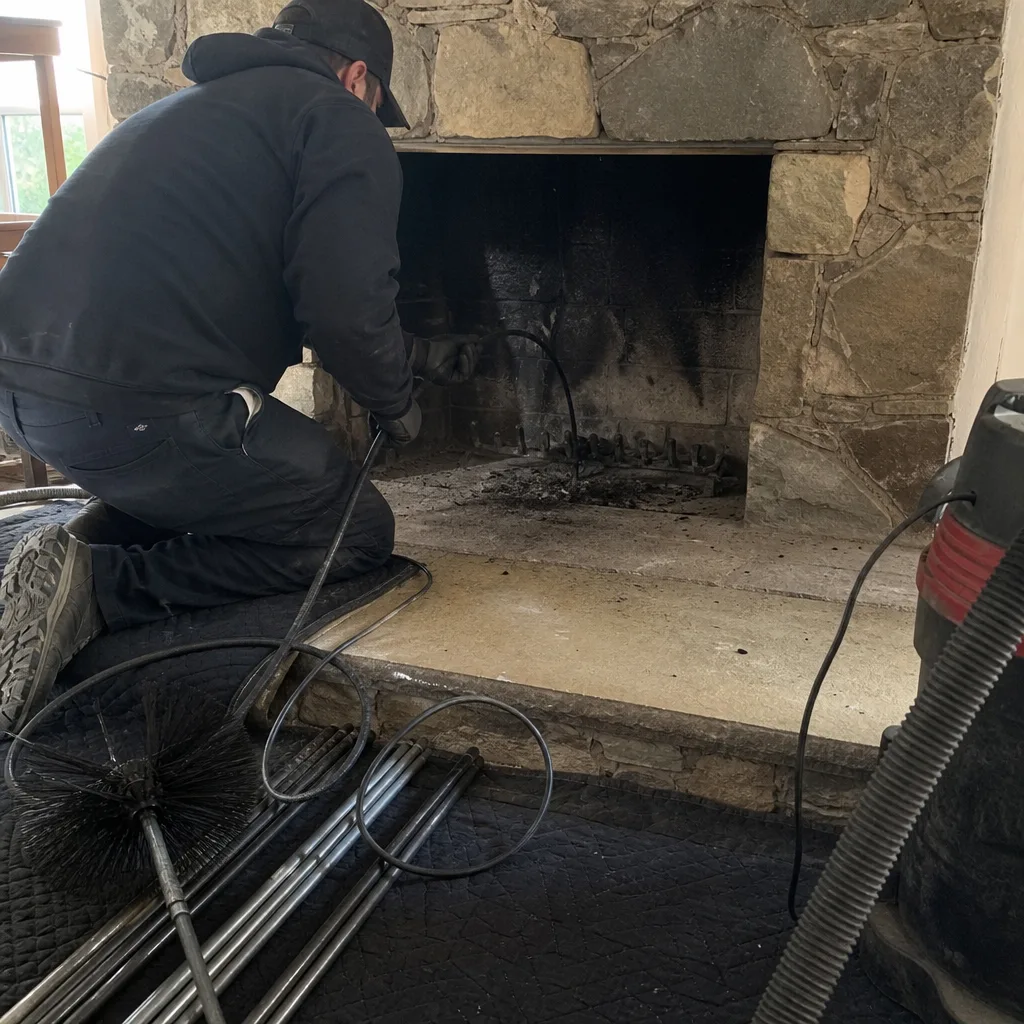
Chimney sweep logs do not sweep chimneys. They loosen some creosote - which then falls where a brush and vacuum still have to collect it.


 Before
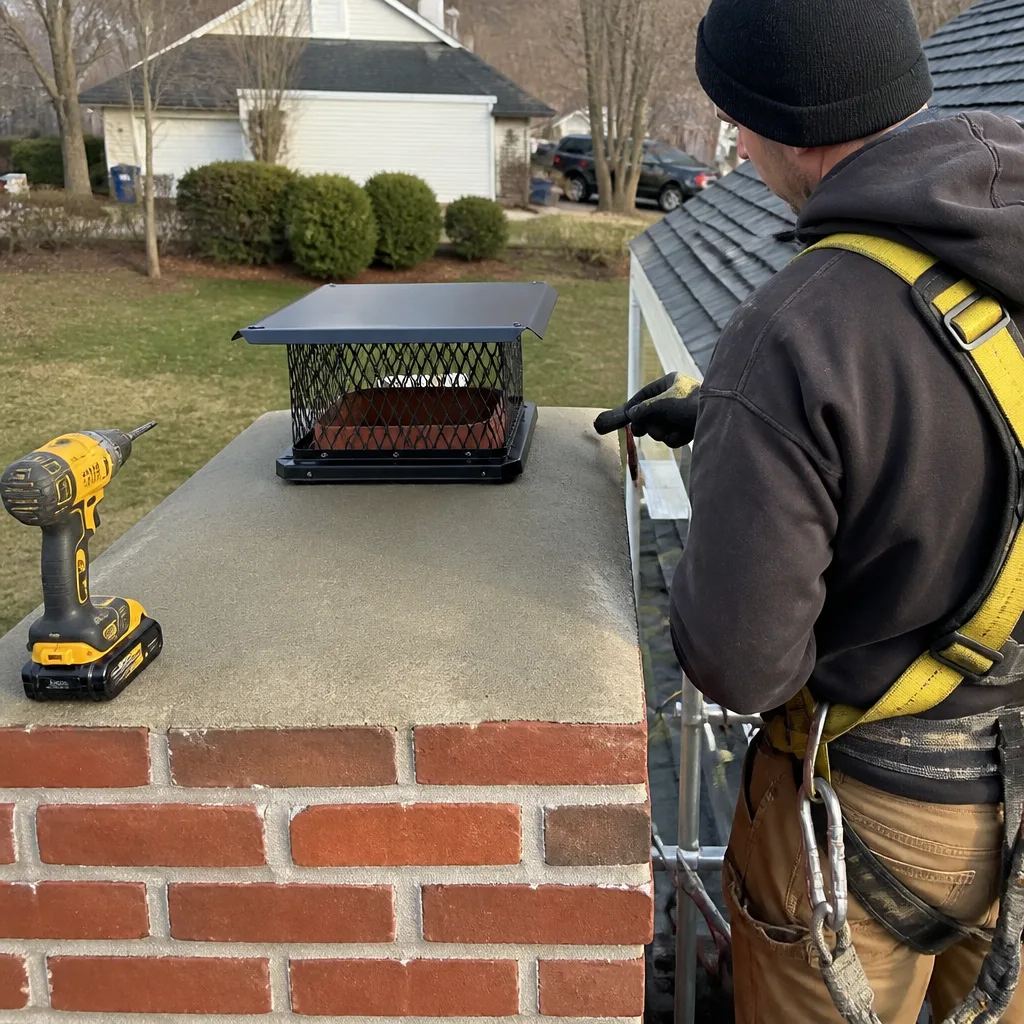 After
After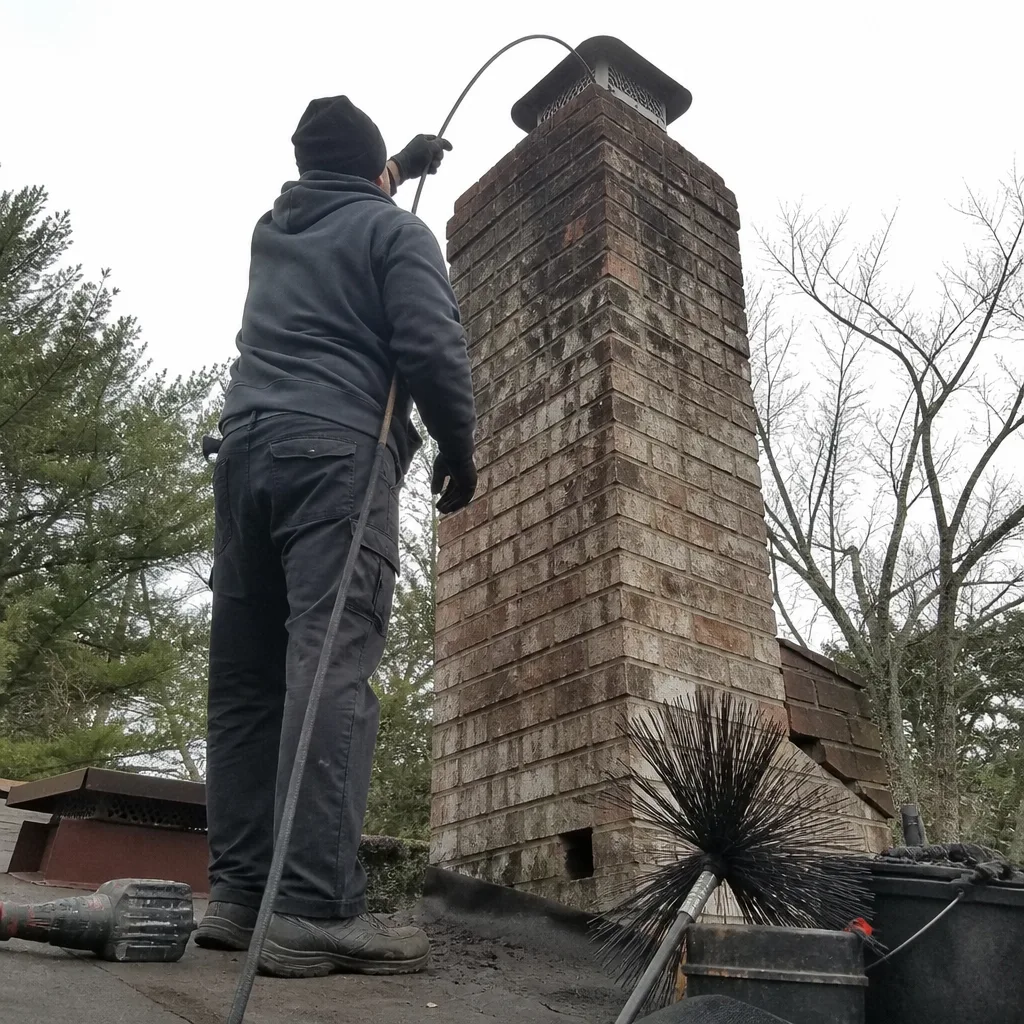 Before
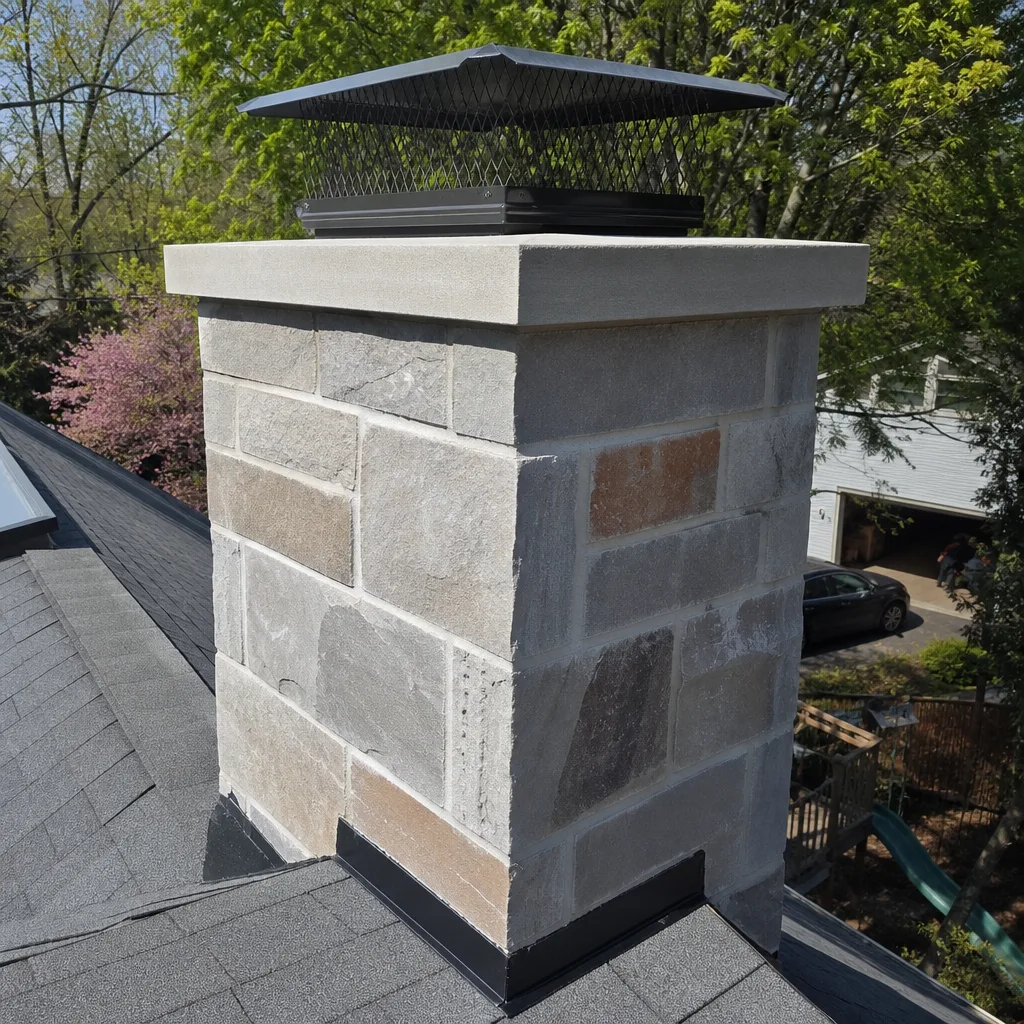 After
After Before
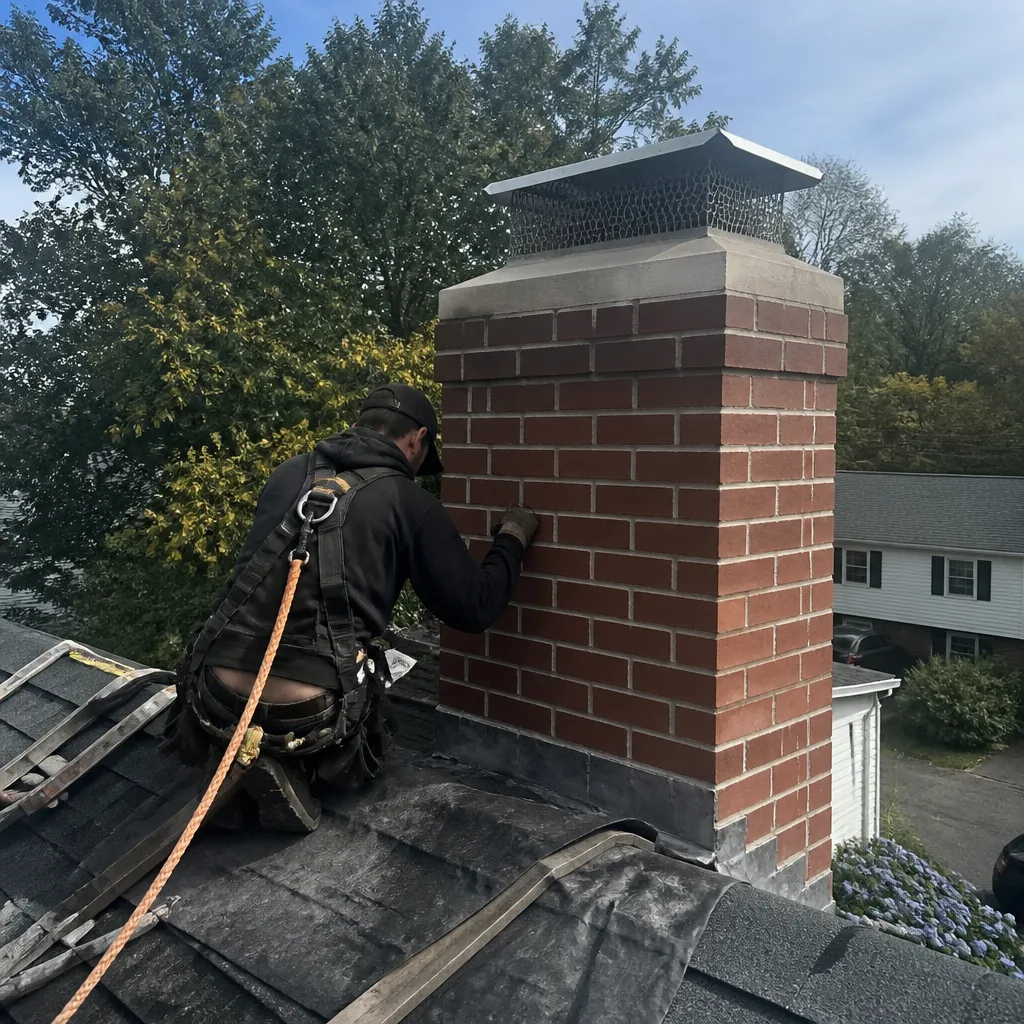 After
AfterChimney Cleaning Permits, Codes & Inspections in MD: What You Need to Know
Here’s the fact most homeowners in Maryland learn too late: cleaning your chimney never requires a permit, but the repair work that a good cleaning often uncovers frequently does. That distinction is where houses get held up at closing, where insurance claims get denied, and where a $400 sweep turns into a $6,000 unpermitted liner replacement that the next buyer’s inspector will flag. This guide walks the actual permit line in Maryland and Anne Arundel County, explains when NFPA 211 has teeth, and shows you how to verify old chimney work on a house you’re buying, especially in the older rowhome stock around Annapolis. For a deeper look at maintenance best practices, see our Complete Guide to Chimney Cleaning in Annapolis. We’ll tell you what a sweep’s report can and cannot do at settlement, and where the code compliance inspection becomes the document that matters.
Quick Answer
A routine chimney cleaning or sweep does not require a permit anywhere in Maryland. However, structural chimney repairs, liner replacement, firebox reconstruction, and certain cap installations, particularly on gas appliances, do trigger permit requirements in Anne Arundel County and most other Maryland jurisdictions. The practical standard governing chimney work in Maryland is NFPA 211, even where local code is silent.
Table of Contents
- Where the Permit Line Actually Sits in Maryland
- Anne Arundel County Thresholds: What Triggers a Permit
- What NFPA 211 Is and Why It Matters in MD
- Level 2 Inspection vs. Code Compliance Inspection: The Difference
- How to Verify Past Chimney Work on a Home You’re Buying
- What a Sweep’s Written Report Can and Cannot Do at Closing
- Chimney Cleaning During a Renovation: The Permit Overlap
- Common Mistakes to Avoid
- When to Call a Professional
- Frequently Asked Questions
- The Bottom Line
Where the Permit Line Actually Sits in Maryland
Maryland has no statewide permit requirement for chimney sweeping. The state’s building codes, adopted at the county level, draw the line between maintenance and modification. Sweeping, brushing, vacuuming, and creosote removal are classified as maintenance. You can have your chimney swept every month if you want and no inspector in Annapolis or anywhere else in Maryland will ever ask to see paperwork for it. The flue is being cleaned, not changed.
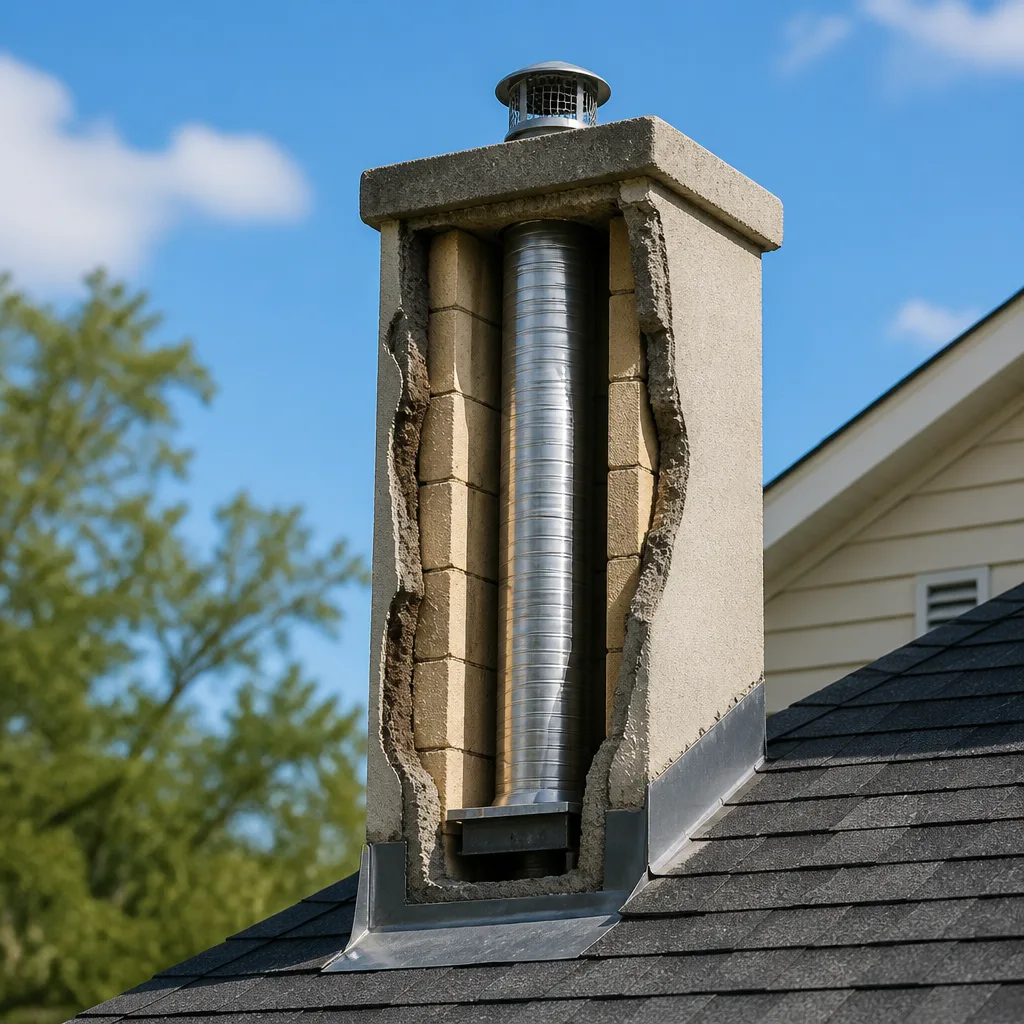
The moment the work changes the physical structure or the flue’s function, you cross into territory where permits apply. A stainless liner dropped into an old terra cotta flue is a modification. Rebuilding a firebox is a structural change. Replacing a crown is structural. Installing a cap on a gas appliance flue is a code compliance issue because gas venting rules are treated differently than wood-burning venting rules under both the International Residential Code and the mechanical codes Maryland counties have adopted.
In our experience in Annapolis and the surrounding Anne Arundel County communities, homeowners run into trouble in two specific ways. First, they stop short of necessary work because they assume any repair means a long permit process, when in reality a liner replacement can often be permitted and completed within a week. Second, they let a contractor talk them out of pulling a permit to save time or money, and that decision comes back when the house goes on the market. A buyer’s inspector in Annapolis who sees a stainless liner cap and finds no record at the county permitting office will flag it. Every time.
Anne Arundel County Thresholds: What Triggers a Permit
Anne Arundel County operates under the International Residential Code with local amendments, and the permitting triggers for chimney work are specific. Here’s what we tell homeowners in Annapolis, Severna Park, Crofton, and the surrounding areas:
- Liner replacement or installation: Requires a mechanical permit. This includes stainless steel liners, cast-in-place liners, and any flue resizing. A liner is not a maintenance item, it’s an alteration of the venting system. Even if you’re just dropping a DuraFlex liner into an existing flue, the county wants to see it permitted and inspected.
- Firebox reconstruction: Requires a building permit. The firebox is part of the home’s structural fire separation. Rebuilding it with new firebrick and refractory mortar changes what was there before, and Anne Arundel County inspectors will want to verify clearances and materials.
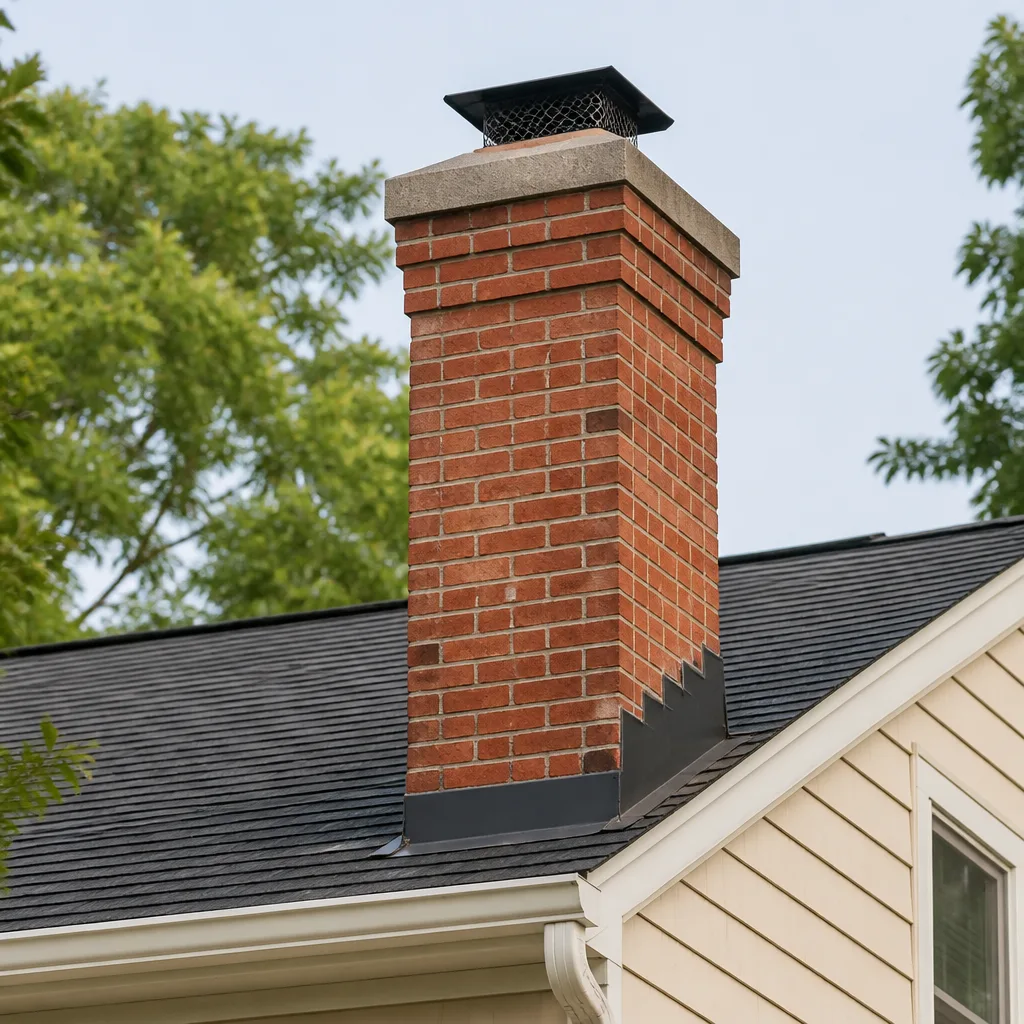
- Chimney crown repair or replacement: If you’re patching minor crown cracks with sealant, no permit. If you’re removing and re-pouring the crown, that’s structural work and triggers a building permit. The county’s position is that a full crown replacement changes the weatherproofing assembly.
- Cap installation on a gas appliance flue: Requires a mechanical permit in most cases. Gas appliance venting is governed by the fuel gas code, and the county treats cap installation on gas flues as a venting modification, not a cosmetic add-on. Wood-burning flue caps that don’t alter the flue’s function usually don’t require a permit, but gas flues are different.
- Complete chimney rebuild from the roofline up: Building permit, full stop. This is structural work, and in historic districts around Annapolis, you may also need review from the Historic Preservation Commission depending on your street.
Here’s the nuance most guides & resources miss: a chimney sweep in Annapolis who finds a cracked flue tile during a cleaning can legally and safely clean that flue without any permit. The cleaning itself doesn’t require one. But if we then recommend a liner and you say yes, the liner work is the permitted portion. We’ve had homeowners ask, “Can’t you just clean it and call it done?” Yes, we can clean it. But a cracked flue tile behind a wood-burning fireplace is a carbon monoxide pathway into the house, and cleaning it doesn’t fix that. The permit for the liner is not bureaucratic overhead. It’s the paper trail that proves the repair was done properly.
What NFPA 211 Is and Why It Matters in MD
NFPA 211 is the National Fire Protection Association’s Standard for Chimneys, Fireplaces, Vents, and Solid Fuel-Burning Appliances. Maryland has not adopted NFPA 211 directly into its building code as a mandate, but here’s what happens in practice: when an Anne Arundel County inspector needs a reference standard for a chimney question the local code doesn’t address, they reach for NFPA 211. When a home inspector in Annapolis flags a chimney issue in a pre-purchase inspection, they cite NFPA 211. When an insurance company denies a chimney fire claim, NFPA 211 is often the standard they say the homeowner failed to maintain. It functions as the de facto rulebook even though it isn’t printed in the county code.
NFPA 211 sets clearance requirements for combustible materials, specifies minimum flue sizing, governs the materials allowed in liner construction, and, most relevant to homeowners, defines the three levels of chimney inspection. Level 1 is the visual check done during a routine sweep. Level 2 is the camera inspection done when the home changes hands, the appliance changes, or a chimney fire has occurred. Level 3 is the invasive inspection that opens walls or removes portions of the chimney to access hidden areas. Most Annapolis homeowners will only ever encounter Level 1 and Level 2.
What NFPA 211 means for the permit question is this: if a sweep’s Level 2 inspection finds flue damage, the repair work that follows is not optional under NFPA 211. The standard says damaged flue liners must be repaired or the appliance must not be used. That’s where our Chimney Repair in Annapolis work usually begins. The permit for that repair is the county’s way of ensuring the NFPA 211 standard was actually met. A liner installed without an inspection is just someone’s word that the flue is safe. A liner installed under permit has an inspector’s record that clearances were verified and materials were appropriate. That record is what protects you later.
Level 2 Inspection vs. Code Compliance Inspection: The Difference
The question we hear most often from buyers and sellers in Annapolis is whether they need a Level 2 inspection or a code compliance inspection, and the answer depends entirely on what you’re trying to accomplish. They are not the same thing, and confusing them can cost you at closing.
A Level 2 inspection is a condition assessment. It uses a video camera to examine the flue interior, the smoke chamber, the firebox, and the accessible portions of the chimney exterior. It documents what is there and what condition it’s in. A Level 2 inspection answers the question: “What shape is this chimney in?” It has no legal weight. You cannot take a Level 2 report to the county and use it to prove code compliance. You can use it to negotiate a repair credit at settlement, and that’s exactly what many Annapolis buyers do. Our Chimney Cleaning & Sweep in Annapolis includes camera documentation for this reason.
A code compliance inspection has legal weight. It’s performed by a county inspector or an approved third-party agency, and it verifies that installed work meets the adopted code at the time of installation. This is the inspection that happens after a permitted liner replacement or firebox rebuild is completed. The inspector checks clearances, materials, flue sizing, and connection details against the code. The resulting record is filed with the county and becomes part of the property’s public permitting history. That filing is what a future buyer’s title search will find.
When do you need the latter? When you’re buying a house in Annapolis and the seller’s disclosure mentions “chimney relined 2018” but there’s no permit on file, you need a code compliance inspection. When you’re selling and you know work was done years ago without permits, you need a code compliance inspection before you list, because the buyer’s inspector will find the gap. The Level 2 tells you how the chimney looks. The code compliance inspection tells you whether the work was legal. At settlement, only one of those holds up.
How to Verify Past Chimney Work on a Home You’re Buying
Older Annapolis rowhomes are the hardest cases. Many of these homes date from the early 1900s, and their chimneys have been modified dozens of times over a century. Some work was permitted. Some predates the county’s current permitting system. Some was done by a handyman on a Saturday with no paper trail at all. When you’re buying one of these homes, here’s the process we recommend:
- Pull the permit history. Search the Anne Arundel County permit database by address. Look for any mechanical or building permits related to the chimney, fireplace, flue, or liner. If you find a permit, get the final inspection record. A permit that was pulled but never given a final inspection is a problem.
- Get a Level 2 camera inspection before you close. This establishes the physical condition regardless of what the paper trail shows. We’ve found unpermitted liner work in Annapolis that was actually installed correctly, and we’ve found permitted work that was failing. The camera tells you what the paperwork doesn’t.
- Compare the physical evidence to the permit history. If the chimney has a stainless liner cap and the permit database shows nothing, you know the work was done without permits. That’s a negotiation point, not necessarily a reason to walk away. You ask the seller to get a code compliance inspection, or you ask for a credit to cover one after purchase.
- Check the listing disclosures carefully. Maryland’s disclosure form asks specifically about known defects and unpermitted work. If a seller checks “no” on unpermitted work and your inspection finds a liner with no permit record, that’s a disclosure violation. In Annapolis’s market, this is leverage for the buyer, and sellers know it. Ask the seller’s agent for written confirmation of any chimney work done during their ownership.
- Get a written estimate for any remediation. If the camera inspection finds unpermitted work that’s also failing, get a written scope of repair with pricing. This becomes the line item on your repair credit request. All Fireplace Services in Annapolis estimates should be itemized and camera-documented so the seller can’t argue the problem doesn’t exist.
The critical thing to understand is that “I didn’t know it required a permit” is not a defense that helps you, whether you’re the buyer inheriting the problem or the seller who created it. Unpermitted structural chimney work is a disclosed defect once you know about it. Once you know, you have to address it.
What a Sweep’s Written Report Can and Cannot Do at Closing
The written report from a professional sweep is a powerful document, but in a Maryland real estate transaction it has clear limits. Understanding those limits will save you from relying on the wrong piece of paper at the wrong moment.
What a sweep’s report can do: It can document the physical condition of the flue, firebox, smoke chamber, crown, and cap with photos and video. It can state whether the chimney is safe to use in its current condition. It can recommend specific repairs with scope and pricing. It can establish that a cleaning was performed and creosote levels were reduced to safe thresholds. It can be used to negotiate a repair credit or price reduction. Buyers use these reports in Annapolis every week to get thousands of dollars credited at closing for liner work, crown repairs, and cap replacements. The report has real negotiating power because it’s independent evidence from someone who actually put a camera in the flue.
What a sweep’s report cannot do: It cannot certify code compliance. It cannot replace a county inspection. It cannot establish that past work was legally permitted. It cannot be filed with the county to close out an open permit. It cannot substitute for the final inspection record that should exist when permitted work is completed. If a buyer’s lender or insurance company asks for proof that the chimney is “up to code,” a sweep’s report does not satisfy that request. Only a code compliance inspection from the county or an approved third-party agency does.
We write every report in plain English because that’s what homeowners can actually use. Your flue doesn’t care how the fire looks. It cares how it breathes. That’s what the report is about: whether the flue can safely move the exhaust out of the house. The permit question is separate, and we’ll tell you when the work we’re recommending crosses into permitted territory. We’ll also tell you when it doesn’t, because in Annapolis there’s plenty of chimney work that’s simply maintenance, and we’re not going to send you to the county for something the county doesn’t care about.
Chimney Cleaning During a Renovation: The Permit Overlap
Renovations create the messiest permit situations. You’re renovating a 1930s rowhome in Annapolis’s Historic District, the general contractor pulled permits for the kitchen remodel, and then someone decides to open up the old fireplace wall. Now you have a chimney that’s been dormant for 40 years, and you want to bring it back into service. What’s permitted, what’s not, and where does the cleaning fit?
The cleaning is never the permitted work. You can sweep a dormant chimney that’s been closed off for decades without a permit, and you should, because old chimneys collect debris, rust, bird nests, and creosote residue that you don’t want disturbed during renovation. That’s a maintenance activity. But bringing that chimney back into service as a working fireplace almost always involves modifications that trigger permits: a new liner, new firebox, new damper, new cap, possibly a flue extension if the house has been re-roofed with a different pitch. Each of those is a separate permitting conversation, and your general contractor’s renovation permit does not automatically cover chimney work. A renovation permit covers the scope described in the permit application. If the chimney wasn’t in that scope, it’s not covered.
For Annapolis homes in the Historic District, there’s an additional layer. Exterior chimney modifications visible from the street may require review from the Historic Preservation Commission. A stainless liner cap on an old brick chimney is visible from the sidewalk, and in some blocks the Commission wants to see material and color choices. This isn’t a reason to skip the work. It’s a reason to sequence it properly: cleaning first, camera inspection second, permit applications third, and the work once the paper is in place. Rushing the sequence is how you end up with a finished liner installation that the county never approved and the Commission never saw, which becomes a disclosure problem the day you list the house.
Common Mistakes to Avoid
- Assuming cleaning and repair are the same permit category. They’re not. A sweep is maintenance and never requires a permit. A liner replacement is a modification and does. If a contractor tells you the liner doesn’t need a permit in Anne Arundel County, get that in writing and then call the county yourself. You’ll get a different answer.
- Letting a contractor skip the permit to save money. The permit fee for a liner replacement in Anne Arundel County is a fraction of the repair cost, and the contractor who wants to skip it is telling you something about how the work will be done. The permit protects you, not the contractor.
- Relying on a home inspector’s chimney note. A home inspector in Annapolis will flag visible chimney issues, but they don’t put a camera in the flue and they don’t have code enforcement authority. Their note should trigger a Level 2 inspection, not serve as your final word on chimney condition.
- Confusing a Level 2 inspection with a code compliance inspection. A Level 2 camera inspection documents condition. A code compliance inspection has legal weight. Only one of these satisfies a permit issue.
- Buying a house with unpermitted chimney work and no plan. Unpermitted liner work is negotiable. Walk away if you want, but the smarter move is a repair credit or a seller-paid code compliance inspection. An unpermitted liner that’s actually in good shape is a paperwork problem, not a safety problem. Fix the paperwork.
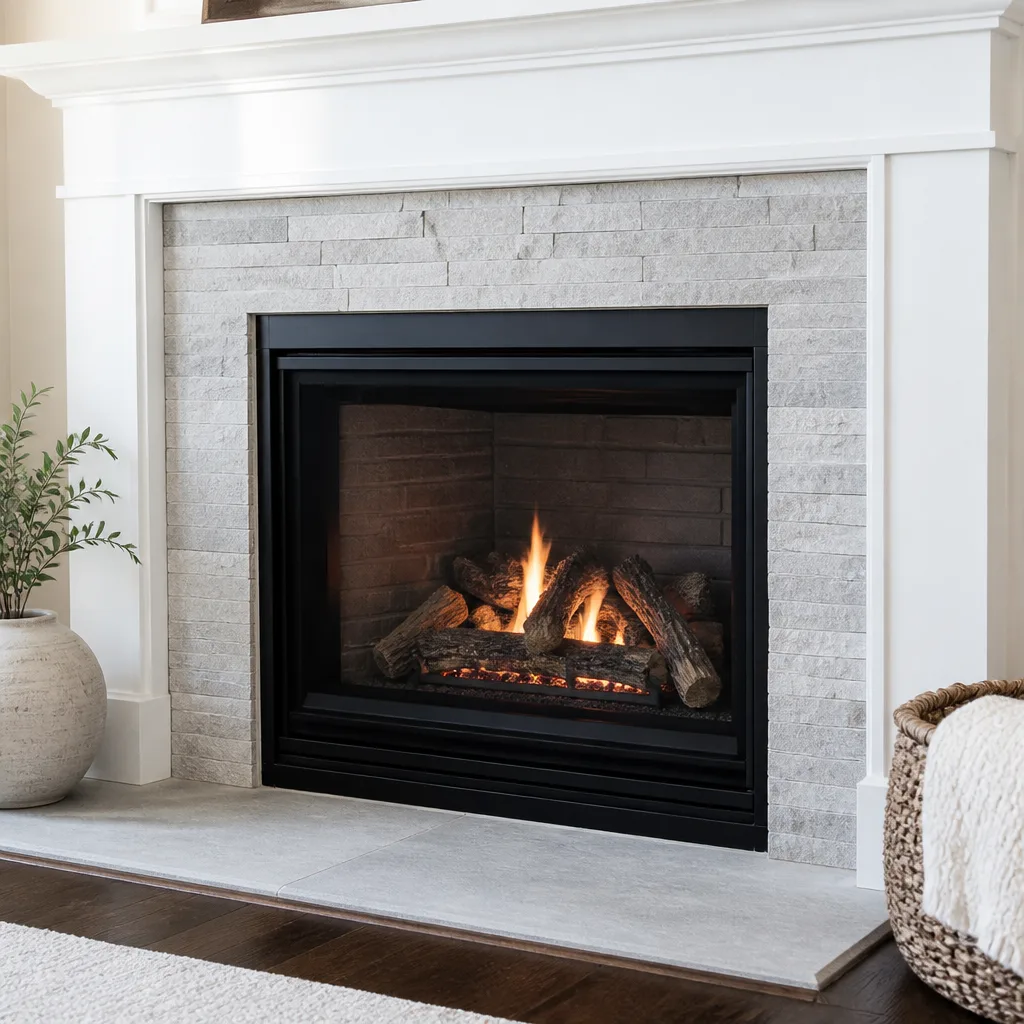
- Ignoring gas appliance venting rules. Wood-burning cap installations rarely need permits. Gas flue caps often do. If you’re adding a gas log set to a wood-burning fireplace, the venting modifications are where the permit question lives. Gas venting has tighter clearance requirements and different material rules under the fuel gas code, and Anne Arundel County enforces this more strictly than most homeowners expect.
When to Call a Professional
Any time you’re not sure whether the repair your chimney needs crosses the permit line, call someone who deals with it every day. If you’ve had a chimney fire and the flue shows glaze creosote or cracked tiles, a professional is the only person who should touch it. If you’re buying a home in Annapolis and the inspection mentioned the chimney, even in passing, get a Level 2 camera inspection before you sign. If you’re selling and you know work was done without permits, address it before you list. If your gas fireplace has never had its venting system inspected, that’s a different set of rules than wood-burning, and it pays to know where you stand. Top Hat Chimney offers free estimates in Annapolis, and we’ll tell you plainly when work can wait and when it can’t. Call (240) 851-3653.
Frequently Asked Questions
No. Routine chimney cleaning, sweeping, and creosote removal are classified as maintenance and do not require a permit anywhere in Maryland, including Anne Arundel County. The permit requirement only kicks in when the work modifies the structure or function of the chimney, such as liner replacement, firebox reconstruction, or gas venting changes.
A standard chimney sweep in Annapolis typically runs between $189 and $349, depending on the level of creosote buildup, the height of the flue, and whether the chimney has been serviced recently. Flues with third-degree glaze creosote or animal debris will run higher because the work takes longer. Call (240) 851-3653 for an exact quote, estimates are free.
Yes, but only if you disclose it. Unpermitted liner replacements or firebox rebuilds that you know about must be disclosed on Maryland’s residential disclosure form. Once disclosed, the buyer will likely request a code compliance inspection or a repair credit. Hiding unpermitted work and having a buyer’s inspector find it is one of the most common ways chimney issues blow up a closing in Annapolis.
A Level 2 inspection is a camera-based condition assessment of the entire flue system, and you need one whenever a home changes hands, the appliance type changes, or a chimney fire has occurred. It’s the standard inspection for real estate transactions in Maryland, and it’s the only way to see flue damage without opening walls. Call (240) 851-3653 to schedule one, free estimates available.
Yes. Gas appliance venting is governed by the fuel gas code, which has different clearance requirements, material specifications, and permitting triggers than wood-burning systems. A cap installation on a gas flue is often a permitted modification, while the same cap on a wood-burning flue is typically maintenance. If your fireplace burns gas, treat the venting rules as a separate code conversation.
Once a year, burn or no burn. Chimneys break in the off-season too, and Maryland’s freeze-thaw cycle in winter is hard on brick and mortar. Annual sweeping also keeps creosote levels low, and first-degree creosote is a brush job while third-degree is a glaze that requires chemical treatment or mechanical removal. Follow our Chimney Cleaning & Sweep Maintenance Checklist for Annapolis Homeowners to stay on track. An annual sweep is the cheapest way to keep the flue safe and catch liner damage before it becomes a permit-level repair.
The Bottom Line
The permit line in Maryland sits between cleaning and modification. Sweeping never requires a permit; liner replacement, firebox rebuilds, and gas venting changes usually do. NFPA 211 is the practical standard that inspectors, insurance companies, and home inspectors all reference, even though Maryland hasn’t adopted it as code. A Level 2 inspection tells you the condition of your chimney; a code compliance inspection has legal weight and is what you need when a past repair’s permit status is in question. For Annapolis homeowners, the risk of unpermitted chimney work shows up at resale, and the time to fix the paperwork is before you list, not at the closing table. When the camera footage tells you the liner is failing, the permit isn’t bureaucracy; it’s the record that the repair was done right. For an honest assessment of your chimney’s condition and the permits it may need, call Top Hat Chimney home at (240) 851-3653.
Written by Wendell Pike, Owner at Top Hat Chimney, serving Annapolis since 1999.