
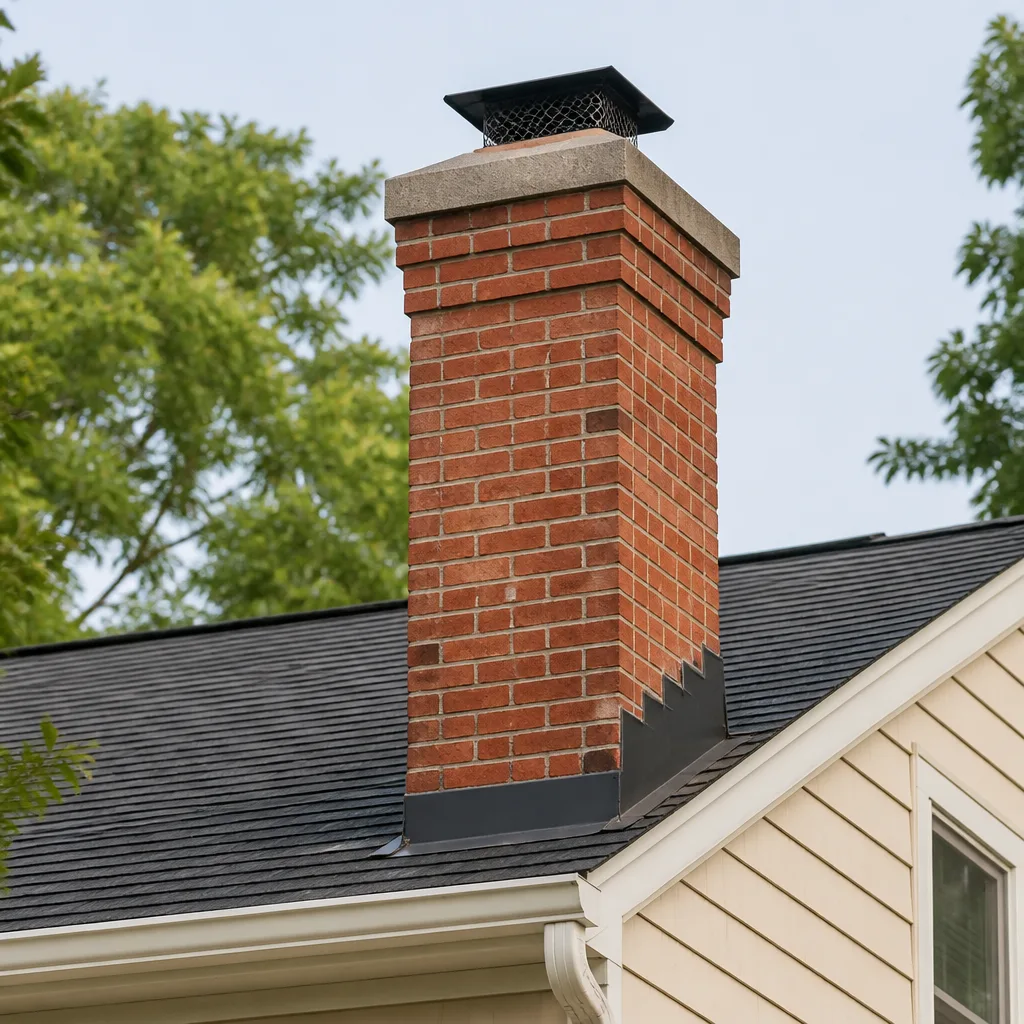
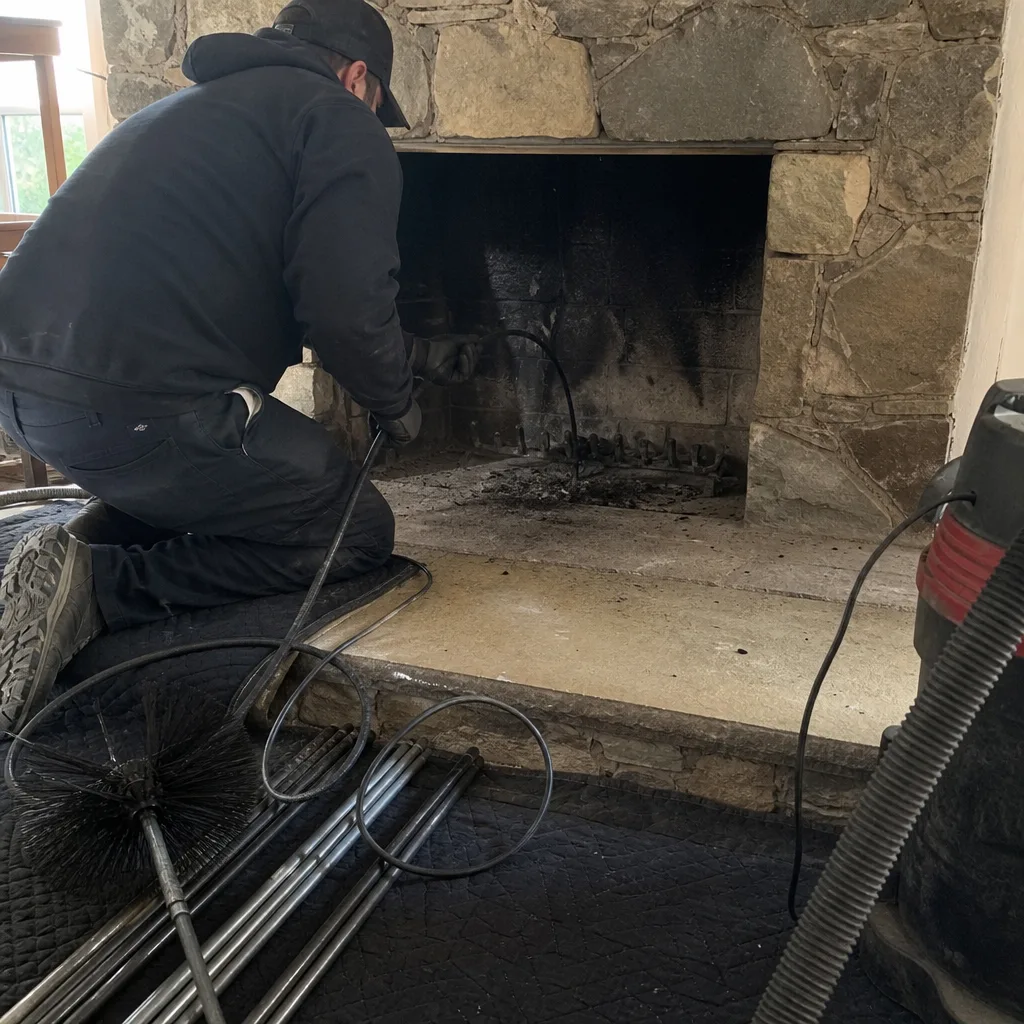
Level 1 sweep and inspection to the NFPA 211 annual standard - flue, crown, cap, and flashing checked and photographed
Chimney sweep logs do not sweep chimneys. They loosen some creosote - which then falls where a brush and vacuum still have to collect it.


 Before
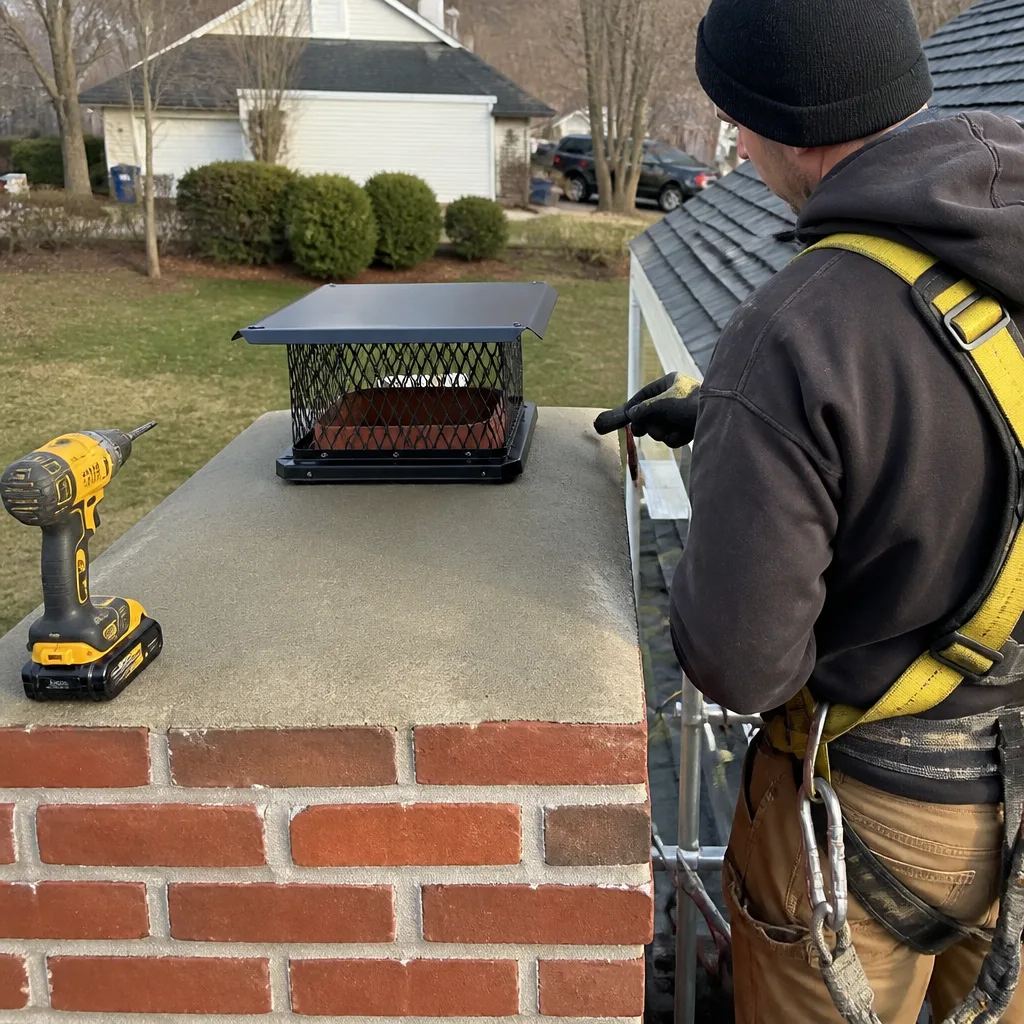 After
After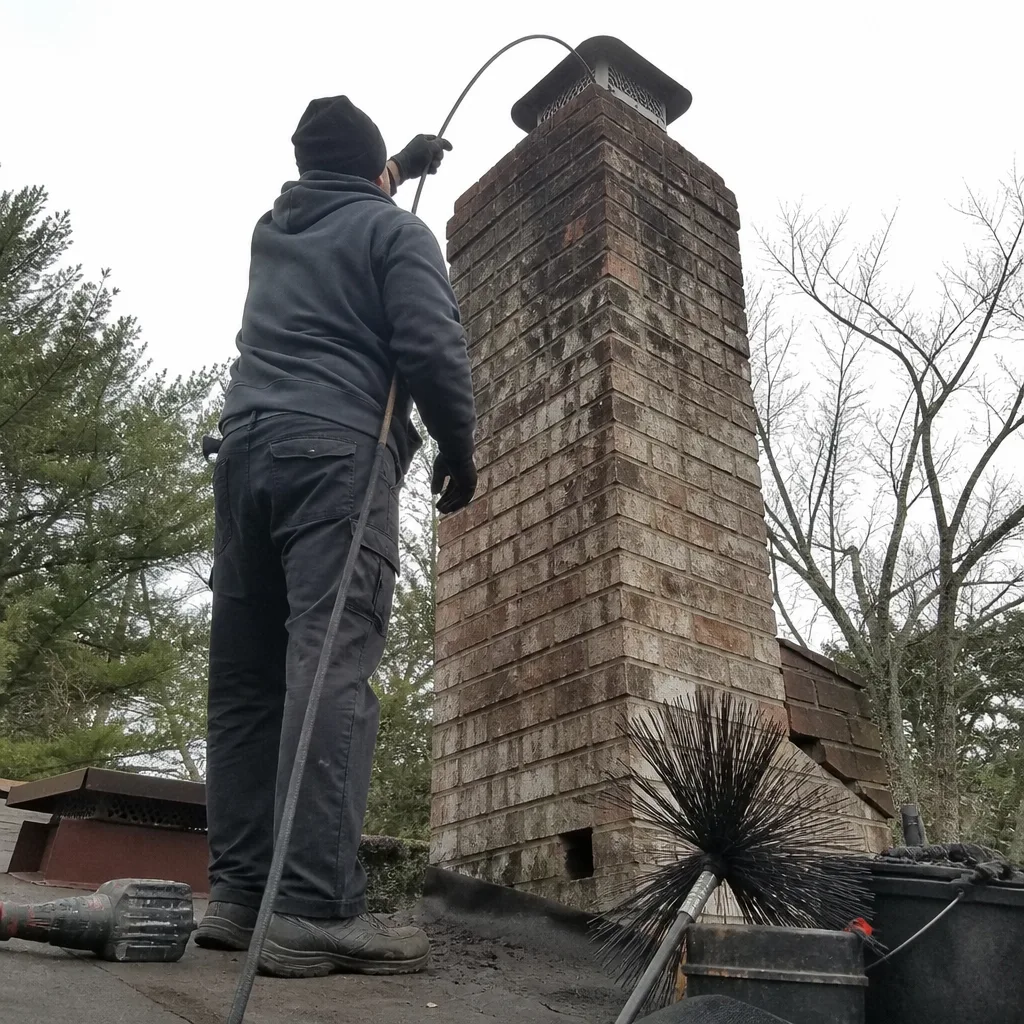 Before
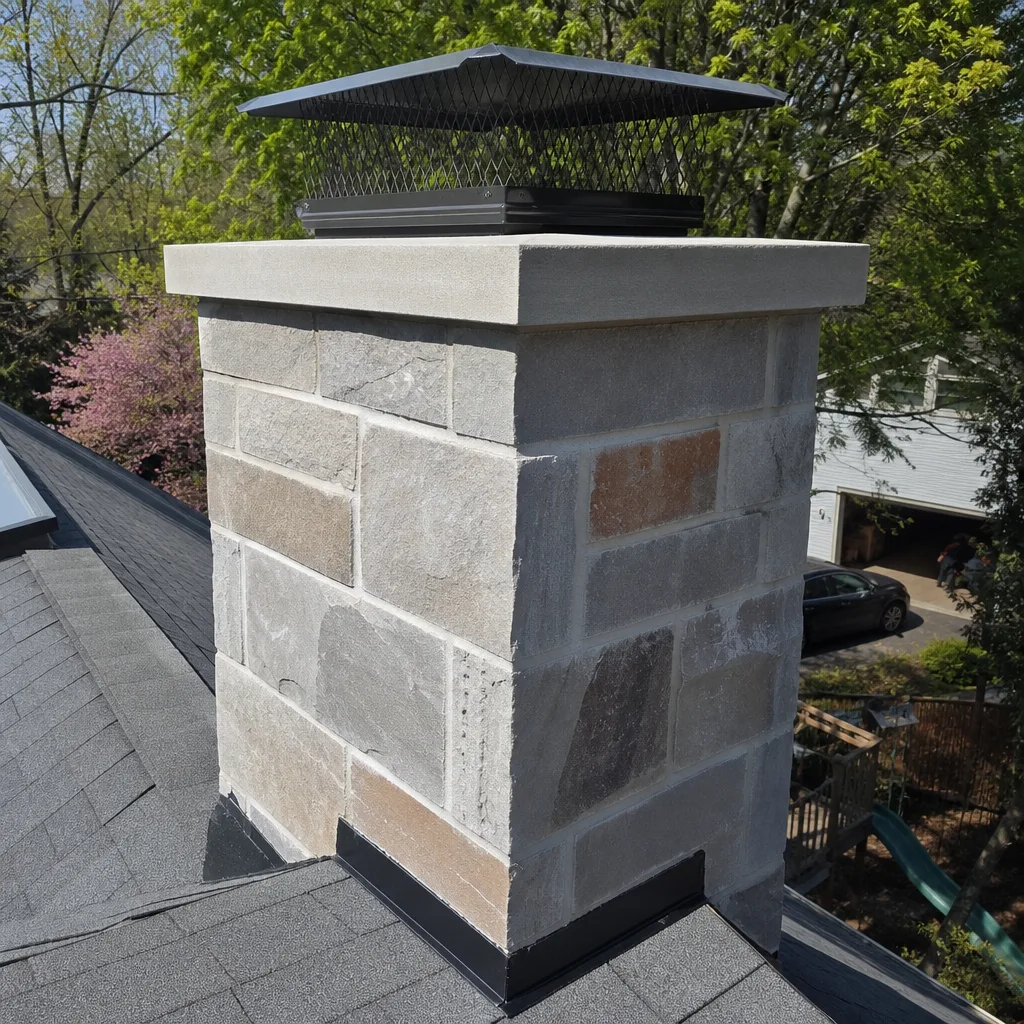 After
After Before
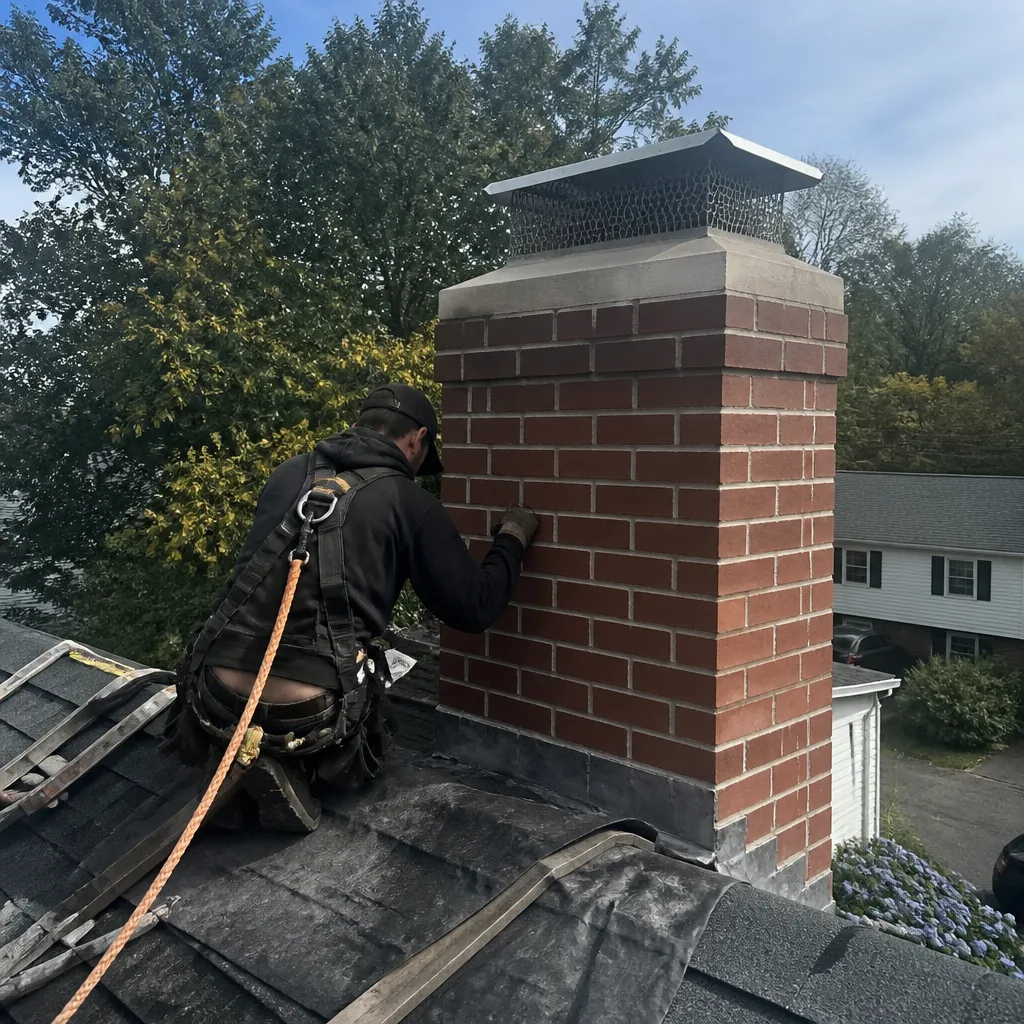 After
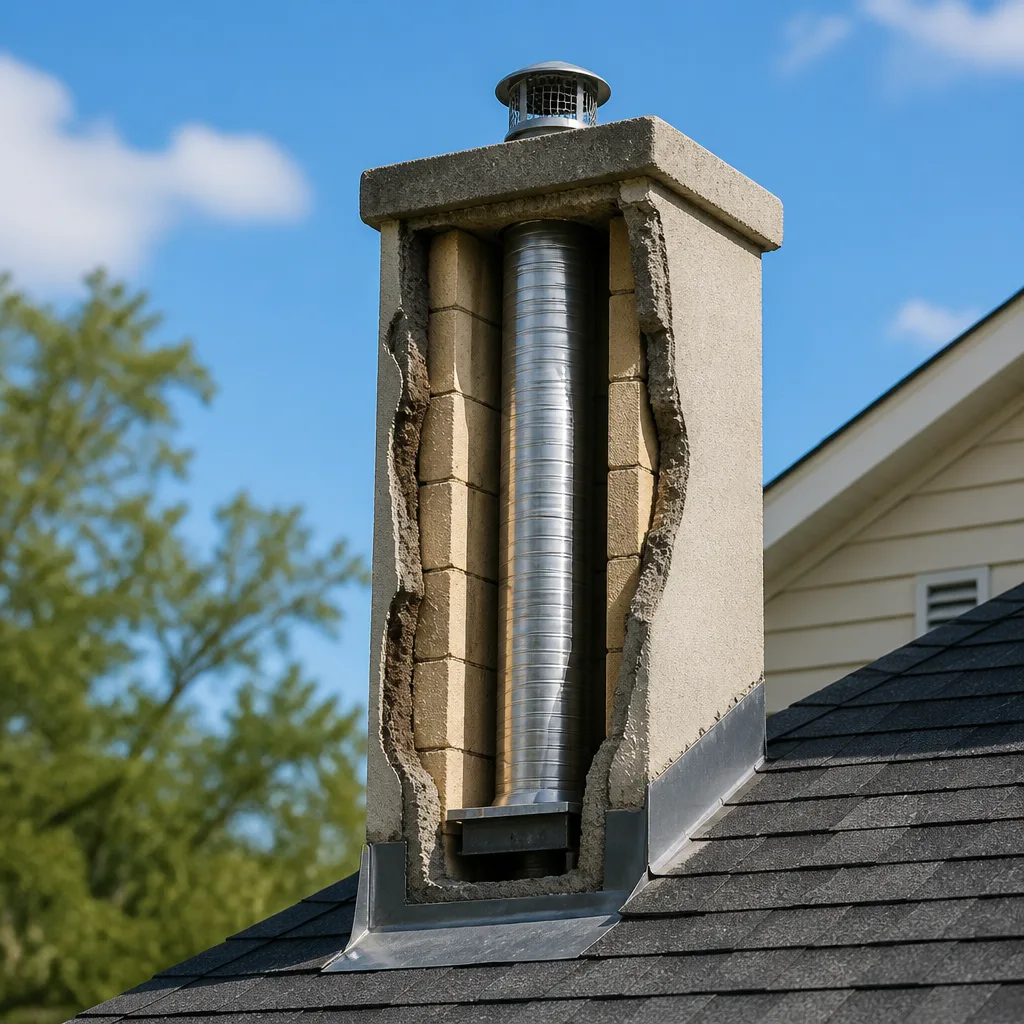
AfterHeatShield Flue Liner Replacement: The Annapolis Owner’s Guide
HeatShield flue liner replacement in Annapolis typically runs $2,200 to $4,800 installed, depending on flue length, liner diameter, and whether we’re doing a straight swap or addressing masonry issues at the same time. We keep common HeatShield-compatible liner sections and connector kits on the truck, which means most Annapolis jobs get done in a single visit. The way most homeowners find out their HeatShield liner has failed is either a chimney inspection that flags it, or water showing up in the firebox after a hard rain. Sometimes it’s the smell of smoke drifting into the upstairs hallway when the fireplace hasn’t been lit in three days. In older Annapolis homes, especially around Murray Hill and Eastport where chimneys have seen fifty-plus Maryland winters, HeatShield liners fail faster than the masonry around them. That’s not a knock on the product, it’s just the reality of freeze-thaw cycles and salt air working on stainless steel joints year after year.

Which HeatShield Models This Applies To
HeatShield has produced several liner systems over the years, and not all parts swap between them. The two you’re most likely to have in an Annapolis home are the HeatShield original ceramic-and-steel hybrid liner and the later HeatShield HP stainless steel series. The HP series uses a 316L alloy that holds up better against the salt-laced humidity we get off the Chesapeake, but its connector bands are sized differently than the original line. If you still have the original ceramic liner from a mid-2000s install, we can’t patch a failed section with HP components and call it good. The diameters won’t seat properly, and a mismatched joint is exactly where exhaust gases find a way out. To identify what you have, look for the stamped metal tag near the top of the liner where it exits the chimney crown. HeatShield stamps model and diameter on that tag, though in Annapolis’s coastal air, that stamp might be rusted smooth by now. If it is, we measure the flue opening and the liner wall thickness on site. Top Hat Chimney is an independent local shop, not affiliated with HeatShield, but we stock and install both OEM HeatShield replacement sections and quality aftermarket equivalents that match the original specs. For the HP series, we usually recommend staying with HeatShield OEM parts, because the aftermarket options for that specific alloy and connector design are spotty. For the original ceramic line, a well-made aftermarket stainless section often outlasts what was there before, and it costs less. Wendell Pike has pulled enough of these apart to know which ones were installed right and which ones were fighting the chimney from day one.
Signs Your HeatShield Flue Liner Replacement Is Failing
- Water stains on the fireplace walls or hearth. This usually means the liner’s top plate or a joint has corroded through, letting rain run down inside the chimney. In Annapolis, with our fall and winter rain pushing sideways off the Bay, a small gap at the crown turns into a lot of water fast.
- A smell like campfire smoke in rooms nowhere near the fireplace. Exhaust gases are escaping the liner and finding their way into wall cavities or the attic. The liner’s job is to carry that gas straight up and out. When it doesn’t, the smell travels.
- Visible rust streaks or flaking metal on the liner surface. If you can see the liner from the top or through the cleanout door and it looks like an old muffler, the stainless or ceramic coating has given up. Surface rust alone isn’t a failure, but flaking and pinholes are.
- Draft problems that got worse over a couple of seasons. A liner with a cracked interior surface disrupts the airflow. Fires are harder to start, smoke rolls back into the room, and the chimney just doesn’t pull like it used to, even after the flue is swept clean.
- Debris falling into the firebox between fires. Pieces of the liner’s ceramic coating or stainless wall breaking off will collect at the base of the chimney. If you’re sweeping up gritty black bits that aren’t just ash, that’s liner material, not creosote.
Replacement Cost & What’s Included
Here’s how HeatShield flue liner replacement pricing breaks down in Annapolis.
- Straight liner swap, single-story chimney: $2,200 to $2,800
- Two-story chimney with roof access complications: $3,000 to $4,200
- Liner replacement plus top plate and crown repair: $3,800 to $4,800
- Cherry picker or steep-roof access in the Historic District: Add $300 to $600 depending on the roof line
Every quote we give in Annapolis includes the liner section itself, connector bands, top plate if needed, labor, and a camera inspection of the finished install before we call the job done. The range depends mostly on flue length and how much of the existing liner comes out in one piece. Some jobs are a half-day pull-and-drop. Some involve the crew pulling out sections that look like they were installed by someone who didn’t own a level. Before we touch anything, you get a written price. The number on that quote is the number on the invoice, and the whole job carries our 90-Day Done Right Promise. If the liner doesn’t draft right, one call brings Wendell and his crew back at no charge.
DIY or Call Us?
A failing flue liner is not a weekend project. This is a safety-critical part that stands between your family and carbon monoxide and chimney fire risk. Improperly fitted liner sections, especially at the joints, invite exactly the kind of slow leak you won’t notice until a carbon monoxide detector goes off at 3 a.m. What you can safely do is shine a flashlight up the flue from the cleanout door and look for rust, flaking, or gaps at the connector bands. You can also check the roof flashing and top plate for daylight coming through. If you see anything that looks like a gap, don’t seal it with hardware store caulk and call it fixed. That’s a temporary patch on a part that needs replacement, and it fails again when you’re not looking. If you’re in Annapolis and your HeatShield liner is showing signs of giving up, call (240) 851-3653 and we’ll take a proper look. If it doesn’t need doing, Wendell will tell you that too.
FAQs
In Annapolis specifically, expect 12 to 18 years from a HeatShield HP stainless liner, and 10 to 15 from an original ceramic-and-steel unit. Our freeze-thaw cycles, coastal salt air, and the humidity that sits in our chimneys all summer shorten liner life compared to drier inland climates. If you burn wet wood or skip annual sweeps, deduct a few years from those numbers. Call (240) 851-3653 and we’ll inspect yours and tell you honestly how much time it has left.
Small pinhole corrosion at a connector band can sometimes be patched with a proper stainless repair sleeve, but once a liner section has cracked through or shows flaking over more than a few inches of surface, replacement of that section is the right fix. Patchwork on a failed liner just moves the problem to the next weak joint. If you’ve got a written estimate from another shop, bring it to us and we’ll give you a free second opinion before you spend a dime.
A straight liner swap in a one-story Annapolis home usually takes us four to six hours from setup to camera inspection. Two-story homes and jobs that involve crown repair run into a second day. We’re not going to rush the camera check that proves the liner is seated right and drafting the way it should.
Yes. Our Annapolis trucks carry common HeatShield HP and original-line replacement sections, connector bands, and top plates. If you need a less common diameter or the chimney has an offset that needs a custom angle fitting, we’ll order it and have it within a few days. We also stock compatible parts from DuraFlex and Gelco when an equivalent alternative makes better sense for the chimney.
Written by Wendell Pike, Owner, Top Hat Chimney - Annapolis, MD at Top Hat Chimney, serving Annapolis and nearby areas.