
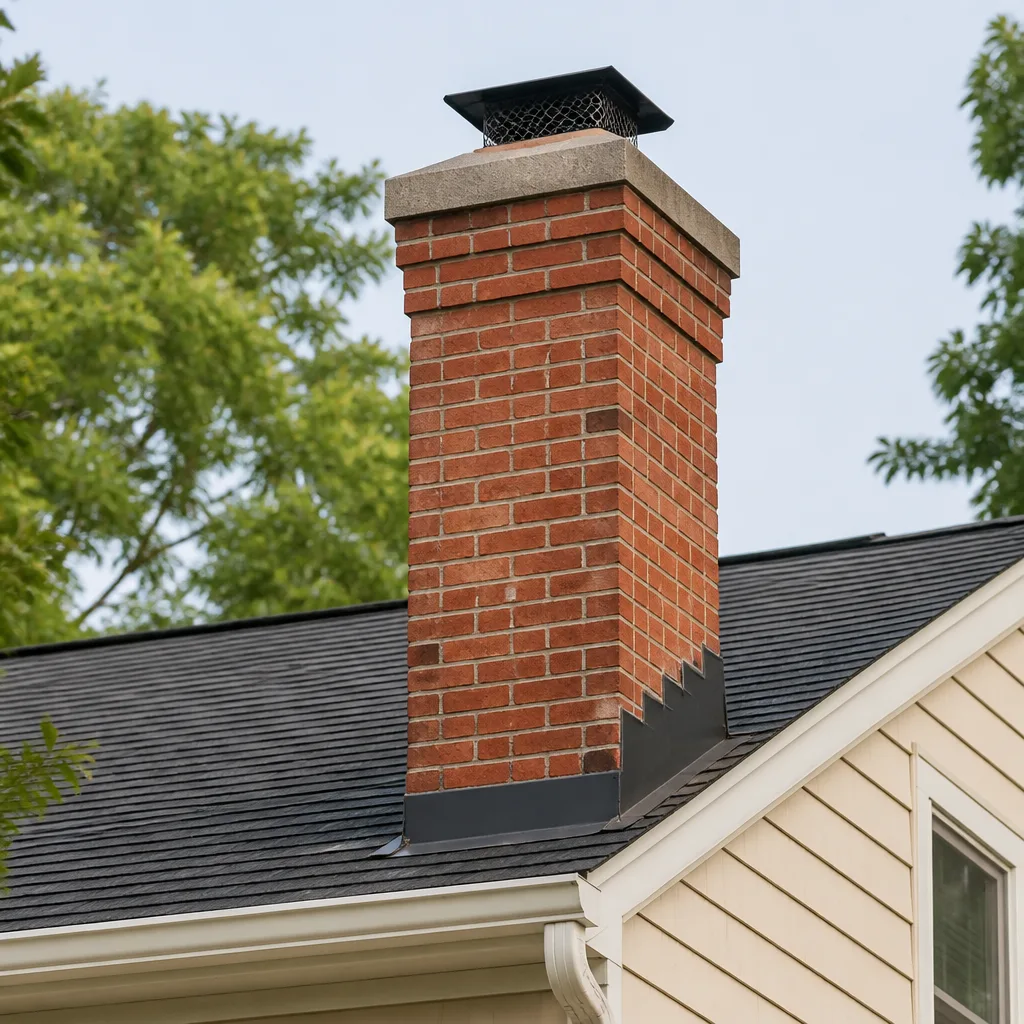
Level 1 sweep and inspection to the NFPA 211 annual standard - flue, crown, cap, and flashing checked and photographed
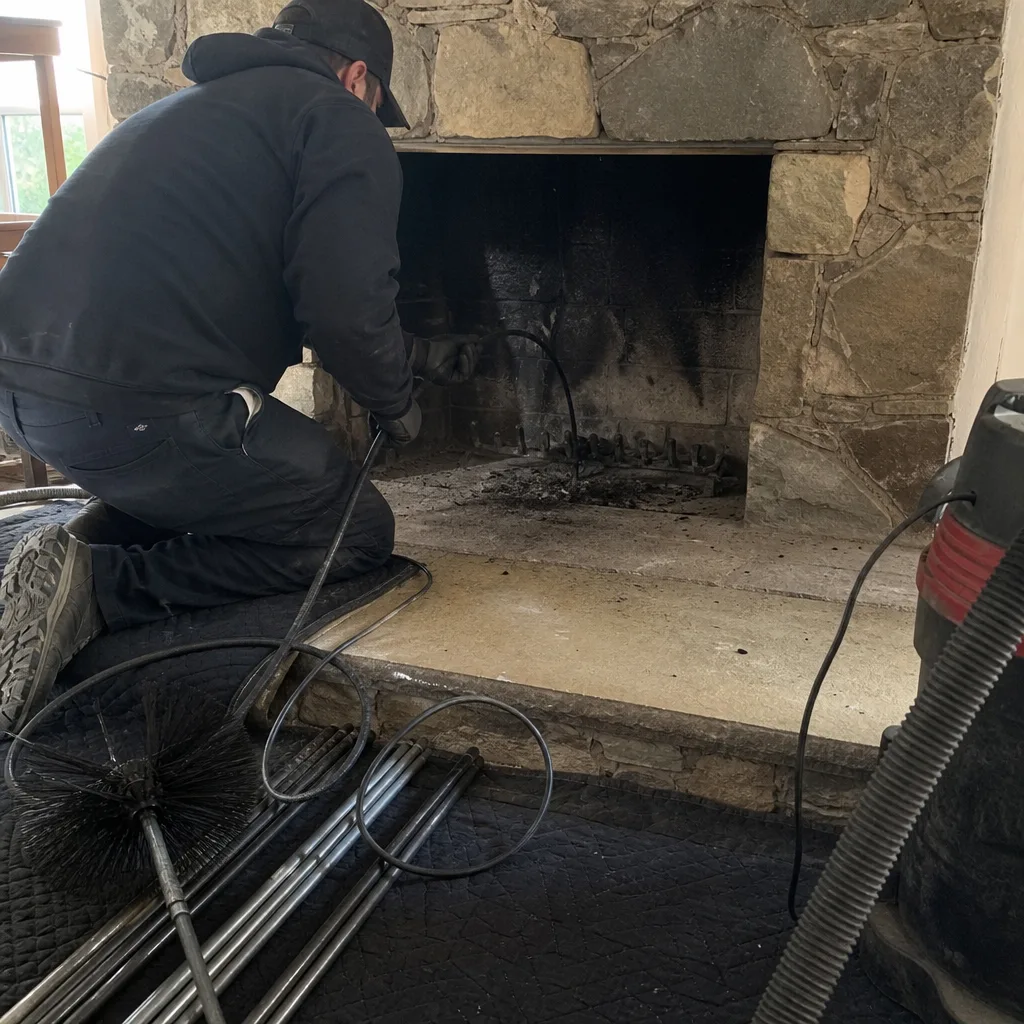
Chimney sweep logs do not sweep chimneys. They loosen some creosote - which then falls where a brush and vacuum still have to collect it.


 Before
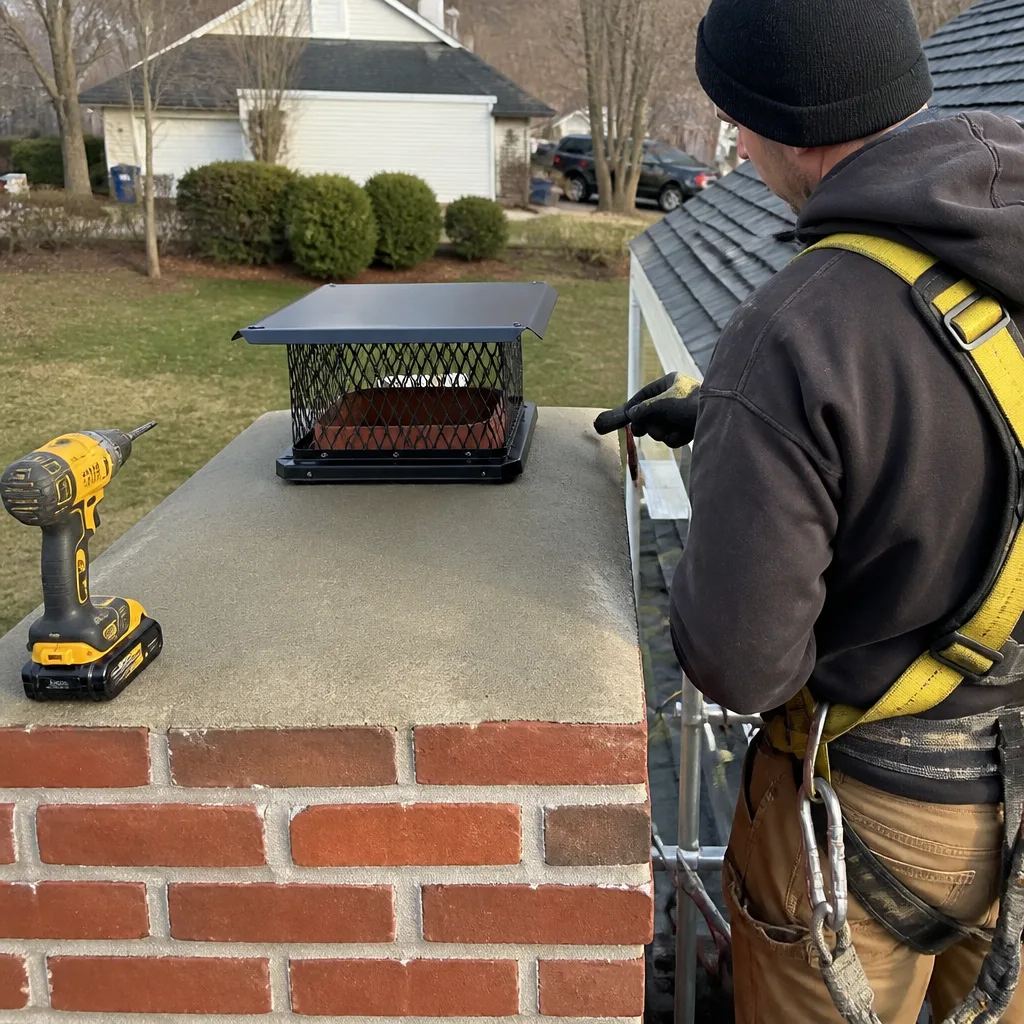 After
After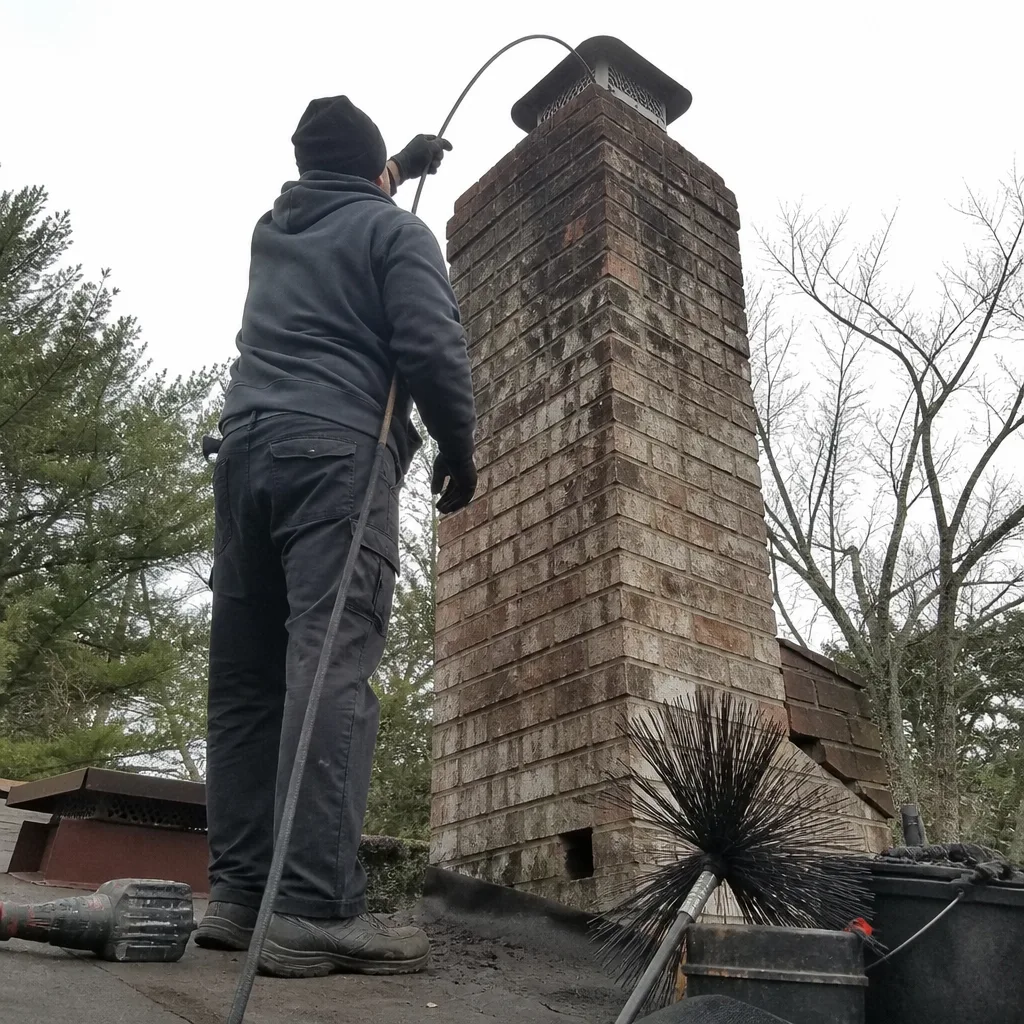 Before
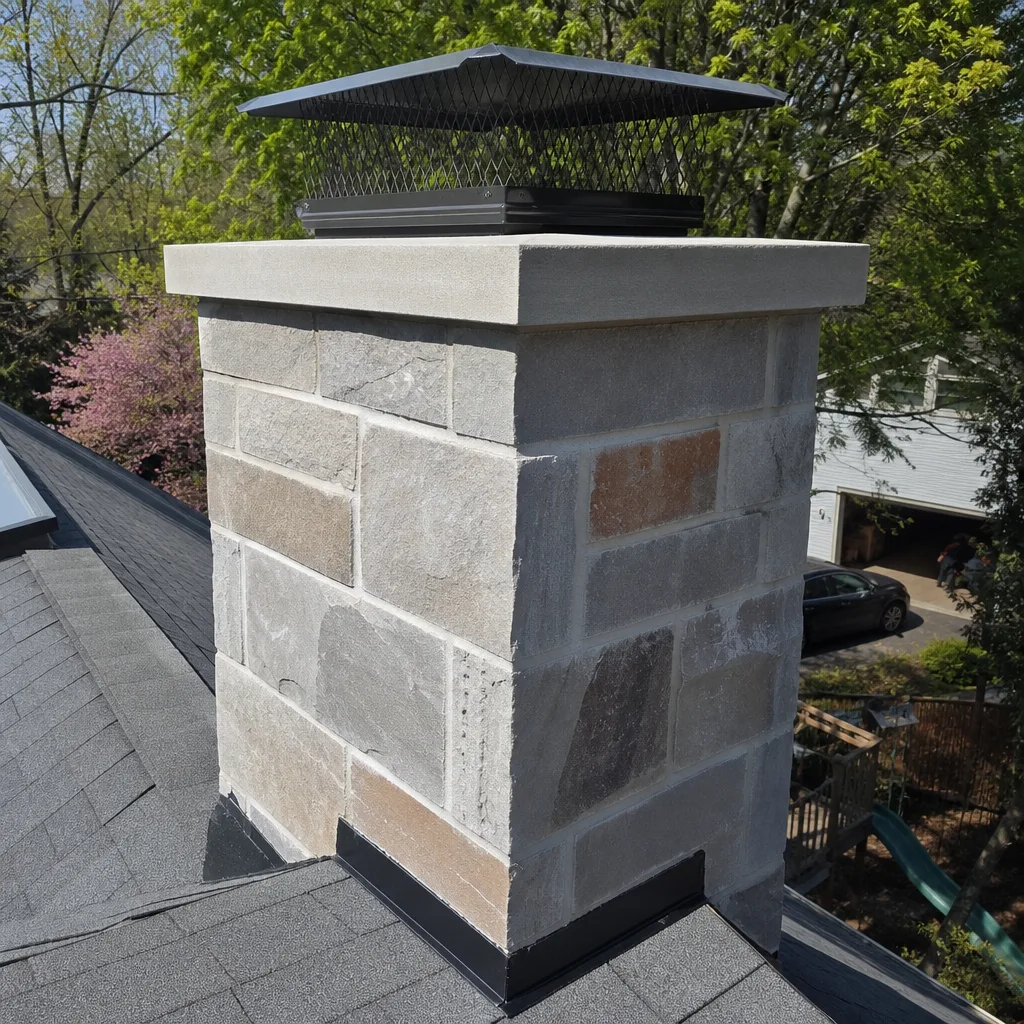 After
After Before
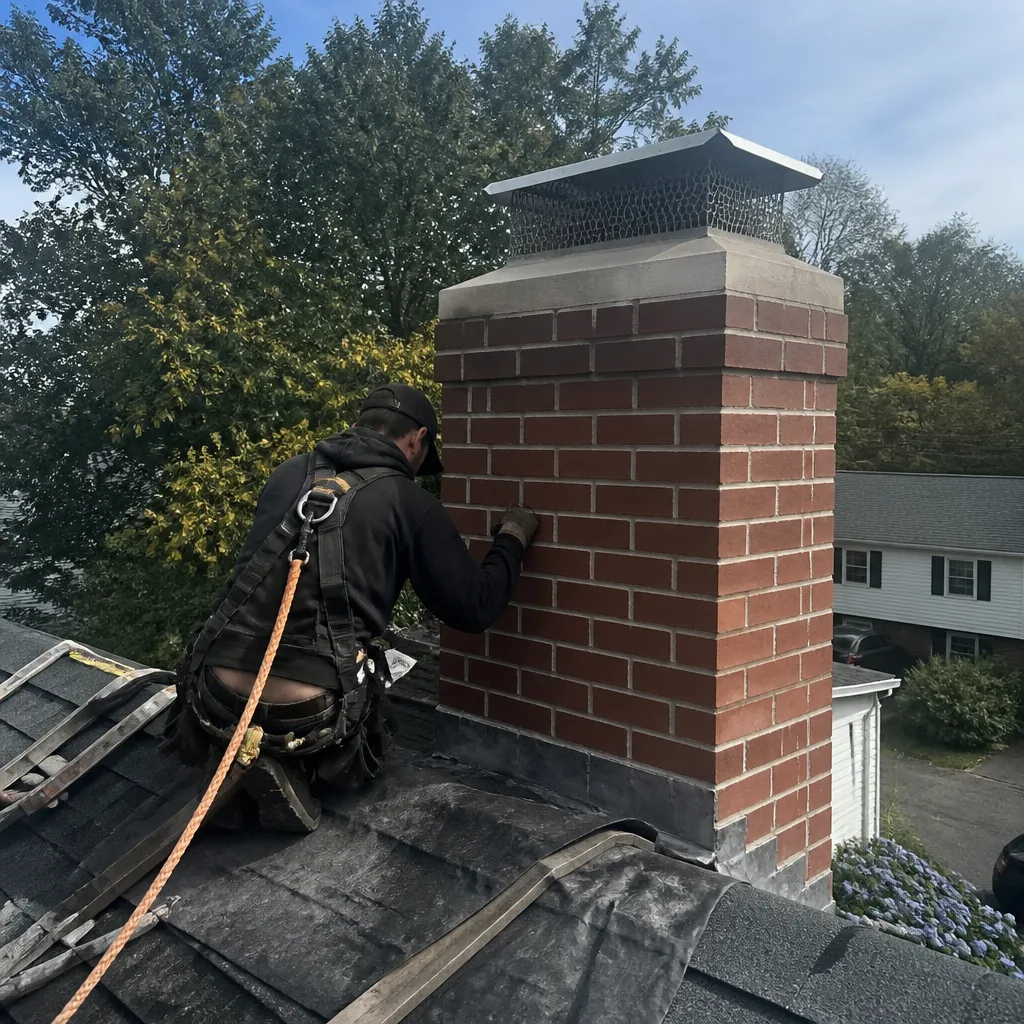 After
AfterGelco Flue Liner Replacement: The Annapolis Owner’s Guide
If you have a Gelco flue liner that’s cracked, rusted through, or delaminating, we stock and install Gelco-compatible replacements throughout Annapolis, and most jobs are done in under a day. A typical Gelco flue liner replacement in Anne Arundel County runs $2,100 to $4,800 installed, depending on liner diameter, flue height, and how much of the old liner has to be pulled first. The way most Annapolis homeowners find out their Gelco liner failed is not dramatic – it’s a rust stain on the hearth, a flake of metal in the firebox, or a sweep (often us) putting a camera up there and showing them the split on screen.

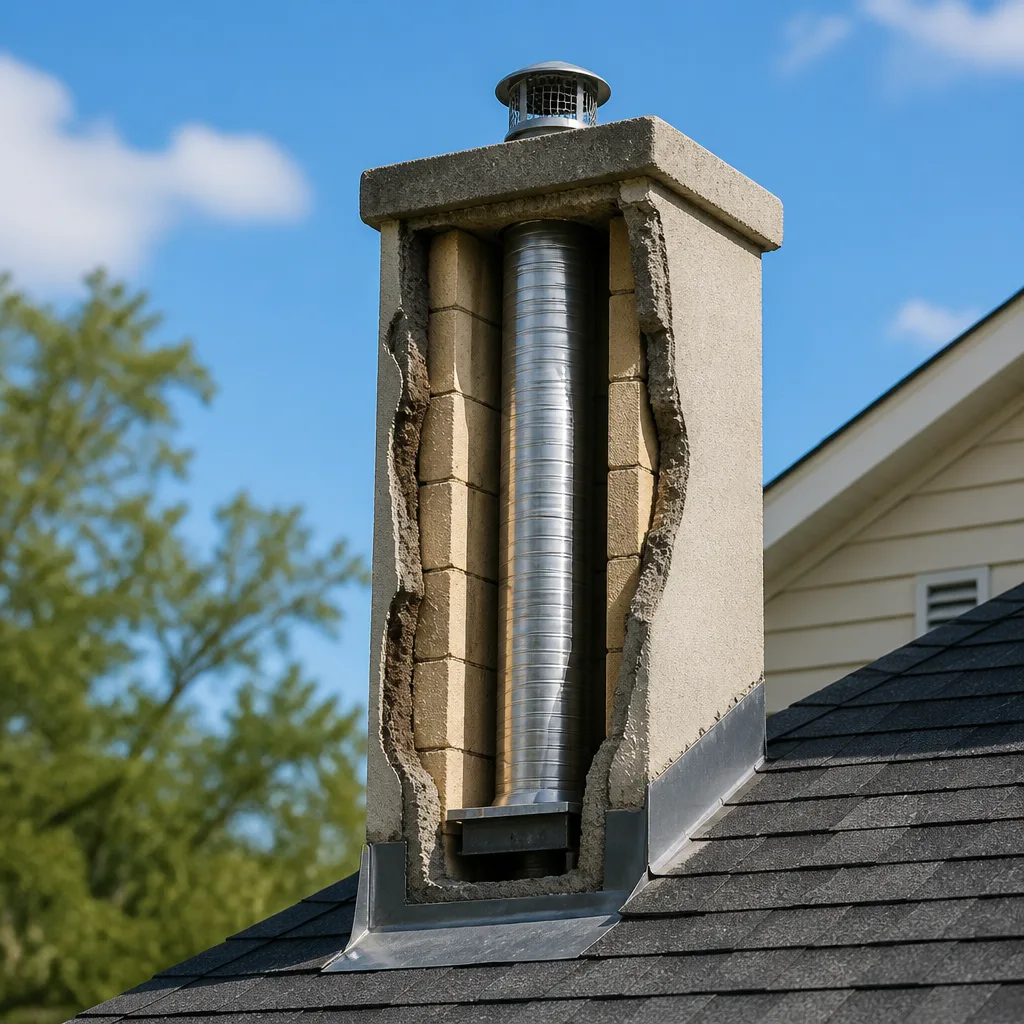
Here’s the straight version: Gelco made a solid product, but no stainless liner lives forever, especially in a salt-air town like Annapolis where morning fog off the Severn sits in flues half the year. When the liner goes, the fix is replacement, not patchwork. And it’s a job worth doing right the first time, because the liner is the only thing standing between flue gases and the inside of your chimney chase.
Which Gelco Models This Applies To
Gelco flue liners were built in two main lines: the standard 316L stainless for wood-burning fireplaces and stoves, and a 316Ti titanium-stabilized version rated for pellet and corn-burning appliances where acidity runs higher. The Ti line is darker, carries a different stamp, and holds up better against the sulfuric acid that pellet exhaust produces. If your Gelco liner is stamped simply “316L” with no Ti designation, it was built for wood, not pellets – and that distinction matters more than most people realize.
Identifying your exact liner is a tape-measure job: you need the inner diameter (usually 5.5, 6, or 8 inches for Gelco residential liners) and the total flue length from the appliance collar to the termination cap. The diameter is stamped on the liner’s surface every few feet in most cases, but if the stamp has corroded away, we measure at the appliance outlet. One compatibility gotcha we see often in Annapolis: older Gelco liners installed in the 1990s and early 2000s were frequently joined with pop rivets rather than the smooth seam-lock used today, and those rivet points are almost always where the first pinholes appear. If you have a riveted Gelco liner, budget for full replacement, not spot repair.
On OEM versus aftermarket: Gelco as a standalone brand has largely been absorbed into distribution channels where the same 316L alloy is sold under several labels. We carry both genuine Gelco-stamped liner sections and DuraFlex and HeatShield equivalents that meet or exceed the same spec. The honest answer is that for standard wood applications, a quality 316L liner from any of those three does the same job. For pellet or high-efficiency gas where condensation is constant, we specify 316Ti regardless of brand. Top Hat Chimney is an independent local contractor – we are not affiliated with Gelco, so when we tell you one product versus another matters, we’re not selling you a logo.
Signs Your Gelco Flue Liner Replacement Is Failing
- Rust flakes or metallic debris in the firebox or cleanout. This is the most common early warning. Stainless doesn’t rust in sheets – it pinholes first, then flakes. Those little curved slivers of metal on the brick are bits of your liner falling from above.
- Water staining on exterior chimney brick or the ceiling near the chase. A cracked liner lets flue condensation and rainwater migrate into masonry. In Annapolis, with our wet springs and salt fog, this shows up faster than inland.
- A smoky smell in the house even when the damper is closed. That odor means flue gases are finding a path down through the gap between liner and masonry, not up and out. It’s not always a failed liner – sometimes it’s a failed crown – but it’s always worth a camera look.
- Visible cracks, gaps, or a sagging section during a cleaning. If you can see it from the top with a flashlight, or if a sweep points it out on camera footage, it’s already compromised. Liners don’t heal.
- Unusual condensation or drips inside the flue during normal operation. A healthy liner carries moisture out as vapor. A failing one lets it condense on cool metal, which accelerates corrosion and eventually drips back down into the appliance.
Replacement Cost & What’s Included
In Annapolis and the surrounding county, a standard single-story Gelco flue liner replacement – removing the old liner, installing a new 316L or 316Ti liner sized to your flue, and connecting it at both ends – typically runs between $2,100 and $3,400. Two-story chimneys with 25-plus feet of flue, or liners that require an insulation wrap for code compliance, push toward the $3,500 to $4,800 range. If the old liner has collapsed and has to be cut out in pieces, that labor adds to the bill.
What you get for that number, from us, is fixed before we start: the liner itself, the top plate and rain cap, the appliance connector, the insulation if required, the full pull-and-install labor, and a camera inspection at the end so you see the finished flue from top to bottom. You don’t pay a separate trip charge inside our service county, and every Gelco replacement we install carries our 90-Day Done Right Promise in writing. If it’s not right, one call brings Wendell and the crew back at no cost to you.
DIY or Call Us?
There are things a homeowner can reasonably check, and things that can hurt you. Checking for rust flakes in the cleanout, looking for water stains on the brick, or shining a flashlight up from the firebox – those are safe and smart. Getting on a ladder with a chimney brush or trying to pull liner sections yourself is where the math stops making sense. A 30-foot ladder on wet Annapolis slate is not the place to learn, and wrestling a corroded liner out through a vertical flue without dropping debris into the appliance below takes a second set of hands and the right rigging.
The real argument for calling us isn’t just safety, though. It’s the camera. We don’t ask you to take our word that the liner failed – we show you the footage, in plain English, before we quote the work. If the liner doesn’t need replacing, we’ll say so, and you’ll pay for a cleaning or nothing at all depending on what’s actually there. Call (240) 851-3653 and we’ll get a real answer on the schedule.
FAQs
A Gelco 316L liner in a wood-burning chimney in Annapolis typically lasts 15 to 25 years, while the 316Ti version in a pellet application often reaches 20 to 30 with proper maintenance. Salt air and wet-season condensation knock about five years off the lifespan compared to inland Maryland. If we’re giving you a number for your liner, it’s based on what the camera shows, not a chart – give us a call at (240) 851-3653 and we’ll set up an inspection.
In almost every case, no – a cracked 316L liner section cannot be welded or patched reliably, because the heat cycling that caused the crack will simply reopen it. The one exception is a liner with damage only at the very top few inches, where a short replacement section can sometimes be fitted under the cap. We’ll only recommend spot repair when we can show you on camera why it will hold.
Most single-story Gelco flue liner replacements in Annapolis are completed in four to six hours, start to finish. Two-story or difficult-access flues can stretch to a full day. We give you a real arrival window and call if the schedule slips; when Wendell’s crew leaves, the new liner is installed, connected, and inspected on camera.
We stock the most common Gelco-compatible diameters – 5.5, 6, and 8 inches – on the truck, along with the matching top plates, caps, connectors, and insulation kits. Odd diameters or extra-tall runs usually mean a short order from our supply house, which adds a day or two at most. If you need it matched to an existing Gelco liner, call (240) 851-3653 and we’ll tell you honestly what’s on hand and what it’ll take.
Written by Wendell Pike, Owner, Top Hat Chimney - Annapolis, MD at Top Hat Chimney, serving Annapolis and nearby areas.